
Dehydrated Onion Receiving Inspection
Key Takeaway
Inspect the container and packaging before unloading, then draw a representative composite sample across the lot for sensory, physical, moisture and microbiological checks. Compare results with the purchase specification, retain a sealed arrival sample, and quarantine material that fails a critical requirement.
Receiving Inspection Starts Before Unloading
A sound dehydrated onion receiving inspection begins with the container, seal and packaging, then moves to representative sampling and checks against the purchase specification. Hold the lot from production use until required tests are complete, and quarantine material with clear evidence of damage or a critical non-conformance.
Receiving inspection protects both product quality and production continuity. A shipment can look acceptable at the container door while defects remain within individual bags or pallets, so a consistent goods-in process matters for flakes, kibbled onion, granules and powder.
For procurement and quality teams, the key reference is the agreed specification—not a general description of the product. Compare the arrival condition and test results with the contract, product specification and accompanying Certificate of Analysis (COA). For background on how handling and processing issues can arise, see common dehydrated onion and garlic issues.
Inspect the Shipment and Draw a Representative Sample
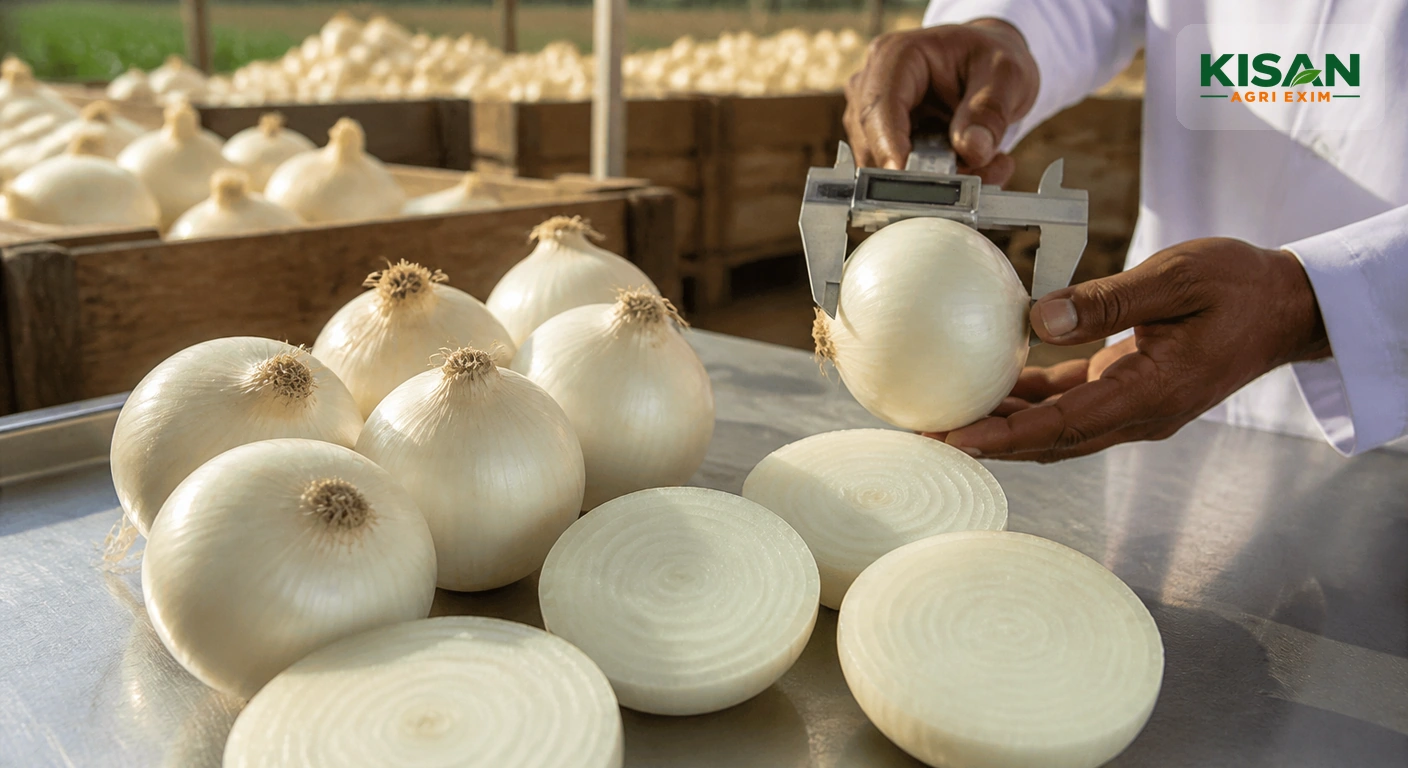
Before unloading, check the container seal against the shipping documents and record any mismatch. Inspect the container interior for punctures, light entry, rust holes, water marks and unusual odors. Check bags, liners or cartons for tears, punctures, collapsed packaging and broken closures. Photograph visible damage before moving the affected packages.
Use a documented sampling plan
Dried agricultural products can vary within a lot. Draw increments from different pallets and positions, including accessible front, middle and rear areas, and combine them into a representative composite. Keep samples intended for microbiological testing separate from general inspection samples; use clean, sanitized equipment and sterile containers to avoid contaminating them during collection.
The American Dehydrated Onion and Garlic Association’s Official Standards and Methods (15th edition) recommend a 25 g composite sample for standard microbiological indices analysis and a 375 g composite sample for Salmonella analysis. These are recommended analytical sample sizes, not a substitute for the buyer’s lot-sampling plan or applicable contractual and regulatory requirements.
Protect samples from ambient moisture during collection, preparation and grinding. The same ADOGA manual specifies that handling and grinding for physical-properties testing occur in an environment with no greater than 70% humidity. This helps prevent sample preparation from changing the moisture result.
Check appearance, odor and flow
Assess the product against its agreed grade and cut form. Look for abnormal discoloration, scorched pieces, foreign material, excessive fines or other visible defects. Smell the sample for characteristic onion pungency and note musty, sour, fermented or burnt odors as potential non-conformances.
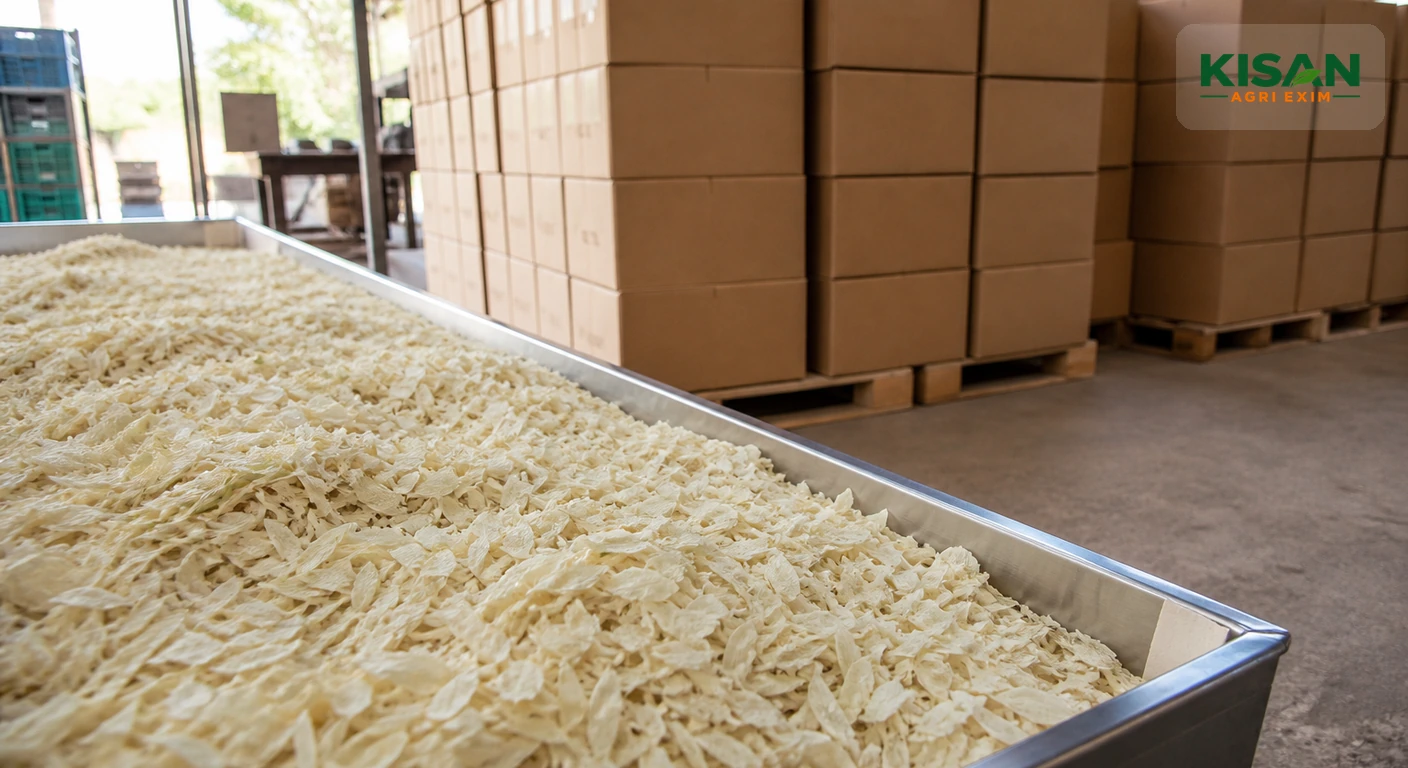
Check flakes, granules and powder for free flow, clumping and hardened masses. Caking can indicate moisture exposure or another condition that needs investigation. Record what is observed, where it was found and which lot or package it came from rather than relying on a general note such as “poor quality.”
Verify moisture against the specification
Use rapid moisture readings as screening results, then confirm disputed or borderline results with the agreed laboratory method. The result must be interpreted against the contract and applicable standard: ADOGA’s Official Standards and Methods (15th edition) set a maximum moisture limit of 5.5% for dehydrated onion products, while India’s Food Safety and Standards (Food Products Standards and Food Additives) Regulations, 2011 set a maximum of 5.0% for powdered onion and 8.0% for other forms of dehydrated onion. The governing limit for a shipment depends on the applicable market requirements and purchase specification.
Where relevant to the contract, laboratory checks may also include ash, acid-insoluble ash, color and microbiological criteria. Compare each result with the limits agreed for the specific product and destination rather than applying one buyer’s specification to every shipment.
Retain Samples, Quarantine Issues and Document Claims
A retained arrival sample gives both parties a reference point if the buyer’s results differ from the COA. Split the composite sample into a test portion and a matched retention portion. Seal the retained portion in a moisture-barrier container, label it with the product, lot code and arrival date, and store it under controlled conditions that preserve the sample.
Quarantine a lot when it fails a critical contractual or regulatory requirement, shows evidence of water damage or contamination, or has defects that make it unsuitable for the intended use. Examples include foreign material, insect activity, a confirmed pathogen result outside the applicable requirement, moisture above the agreed limit, or irreversible caking. Keep affected goods segregated while the buyer reviews results and agrees on disposition or joint re-sampling with the exporter.
For a claim, issue a formal non-conformance report promptly. Include the purchase order and lot identification, seal and container records, photographs of damaged packaging and affected product, sampling details, test methods and laboratory reports. Preserve the retained sample and maintain a clear chain of custody until the claim is resolved. These records help distinguish an arrival-condition issue from a result affected by later handling.
Conclusion
A reliable receiving process combines container checks, representative sampling, sensory and physical inspection, specification-based testing and a sealed retained sample. Procurement managers, QA leads and supply chain directors should quarantine documented non-conformances promptly and preserve evidence before the product is moved or used.
Next Step
See specifications and cut forms in our dehydrated onion range or dehydrated garlic range, or talk to our export sales desk to get tailored product specifications and custom bulk pricing for your market.
FAQs
What should a buyer check first when dehydrated onion arrives?
Verify the seal and shipping documents, inspect the container for damage or water entry, and examine packaging for punctures or broken closures before unloading. Record and photograph any irregularities.
How should a buyer sample a dehydrated onion shipment?
Use a documented plan that draws increments from different pallets and positions across the lot, then combine them into a representative composite. Keep microbiological samples separate and protect all samples from moisture during handling.
When should a dehydrated onion lot be quarantined?
Quarantine material that fails a critical contractual or regulatory requirement or shows evidence of contamination, water damage or irreversible caking. Preserve the affected goods and retained sample, and document the non-conformance before agreeing on disposition.
Ready to source?
Looking for a reliable export partner?
Our export team responds within 24 hours to help you with your bulk sourcing and custom quotation requirements.