Raw Material Quality for Dehydrated Onion and Garlic
Key Takeaway
Raw onion and garlic quality determines dehydration yield, drying behaviour, colour, aroma and physical consistency. Buyers should assess dry matter or soluble solids alongside bulb size, health, pungency and skin condition, because defects in incoming bulbs can carry through to the finished product.
Why Raw Material Quality Matters
Raw onion and garlic quality sets the foundation for dehydration yield, drying behaviour, finished colour and flavour. For processors, the key incoming parameters are dry matter or soluble solids, bulb size and geometry, bulb health, pungency, and the condition of the outer skin.
These characteristics influence how much usable material remains after trimming and peeling, how evenly the product dries, and whether the finished product meets a buyer’s requirements for appearance and sensory performance. A defect that seems minor in a whole bulb can become more apparent after slicing, drying or milling.
For procurement and quality teams, raw-material review should connect field and storage condition to the intended finished form. A suitable bulb is not simply one that looks clean externally: internal structure, maturity and the balance of soluble and structural components affect both processing performance and product consistency.
Key Raw Onion and Garlic Quality Parameters
Dry matter and soluble solids
Dry matter is central to dehydration economics because it represents the portion of the bulb that remains after moisture is removed. High soluble solids are also a useful indicator for assessing industrial onion suitability.
Higher solids can support better finished yield and reduce the amount of water that must be removed during drying. Fresh-market onion types with high free-moisture content are generally less suited to commercial dehydration. However, soluble solids measured in expressed juice are a practical indicator, not a direct substitute for gravimetric total dry matter across different growing and storage conditions.
The balance of sugars and other solids also affects appearance. An unsuitable composition can increase the risk of browning or scorching during drying, producing darker flakes or powder.
Bulb size and geometry
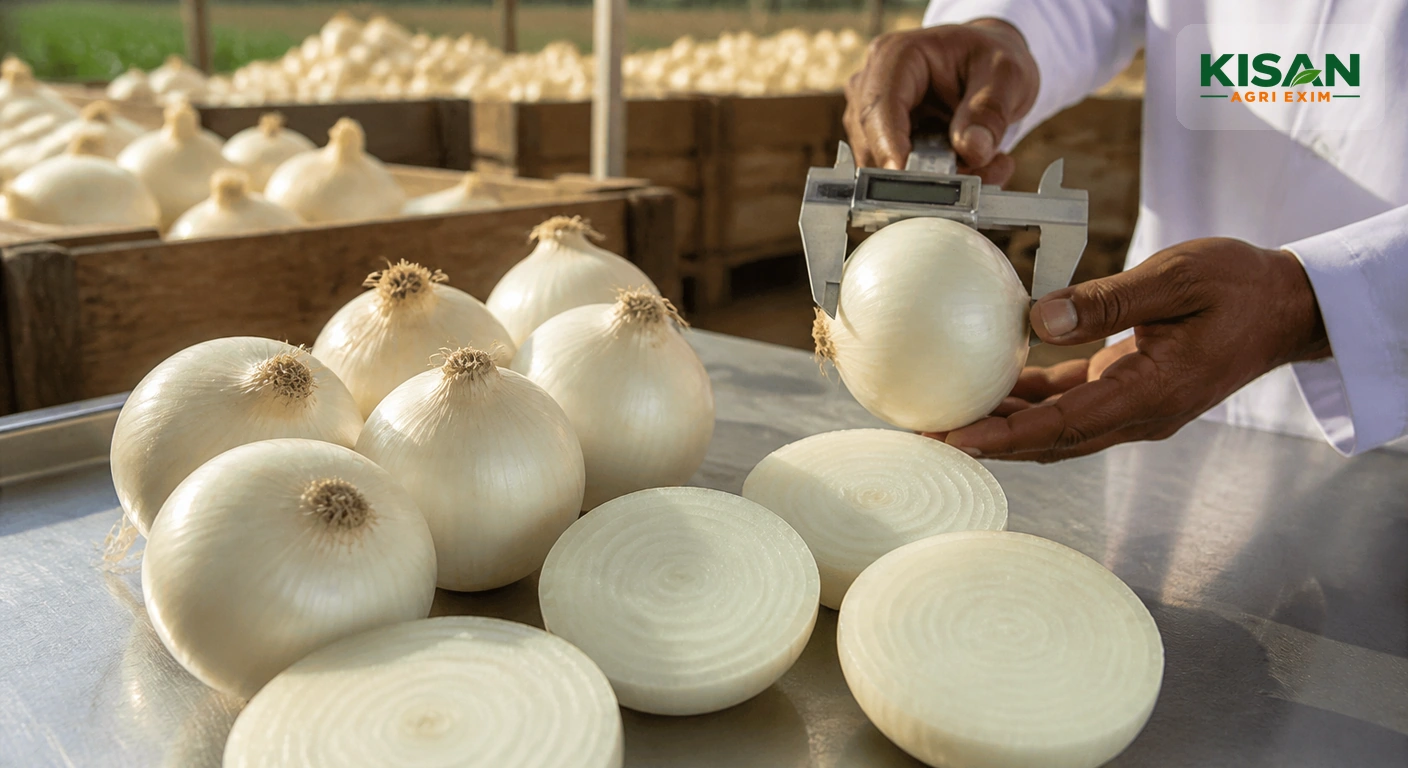
Uniform size and a regular spherical-to-oval shape help maintain consistent trimming, peeling and slicing. Very small bulbs can have a high proportion of skin and root tissue relative to usable flesh, increasing preparation losses. Flat or irregular bulbs can be harder to slice uniformly.
Slice consistency matters downstream: pieces of uneven thickness dry at different rates. Thin pieces can become over-dried or scorched while thicker pieces retain moisture, compromising batch uniformity.
Bulb health and internal defects
Sound, firm bulbs provide better usable yield and reduce the introduction of damaged tissue into preparation and processing. Rot, decay, bruising and signs of internal deterioration can affect both product quality and hygiene.
For onion, an open or poorly cured neck can leave a route for moisture and fungal contamination. Bolting—the development of a woody central stem—creates tough material that does not slice or rehydrate like sound bulb tissue. Doubles and bulbs with multiple centres can trap soil and dry skin between sections, making cleaning and peeling less effective.
In garlic, decayed or softened cloves are unsuitable for consistent processing. Clove separation and internal damage can also complicate peeling and increase the chance of undesirable material entering the prepared product.
Pungency and aroma potential
Pungency contributes to the characteristic aroma and flavour expected in dehydrated onion and garlic. In onion, enzymatic pyruvic acid measurement is used as a biochemical indicator of pungency.
Raw-material maturity and condition influence the strength and consistency of flavour after processing. Weak or variable pungency can produce a finished product that performs inconsistently in seasoning blends, sauces and other food applications. Buyers should assess pungency against the intended product and end use rather than relying on visual appearance alone.
Skin condition and cleanliness
Intact, well-cured outer skins protect bulbs from handling damage and help limit exposure to surface contamination. In garlic, intact outer skins also help keep cloves together during handling. Loose, damaged or heavily soiled skins make cleaning and preparation more difficult and can increase the amount of foreign material carried into processing.
Skin condition should be considered alongside bulb health: a clean exterior does not rule out internal decay, while extensive surface damage can signal handling or storage issues that affect usable yield.
How Raw-Material Quality Carries Through Processing
The effects of incoming quality compound across preparation and drying. Bulb size and shape influence trimming and slicing; dry matter and soluble solids affect water removal and yield; internal defects increase waste; and inconsistent pungency affects the sensory profile of the finished product.
Physical defects also affect finished appearance. Trapped skins and field soil can contribute dark specks or mineral contamination if they are not removed effectively. This is relevant to buyer specifications for cleanliness and ash: a guide to dehydrated onion exports from India lists maximum total ash of 5.0% on a dry basis and maximum acid-insoluble ash of 0.5%. These are finished-product specifications, not raw-bulb acceptance limits.
For garlic, export-grade dehydrated garlic from India is described in an industry guide as typically maintaining finished moisture below 5%. Like the ash limits, that is a finished-product figure; it does not define the moisture condition of incoming fresh garlic.
Finished-product criteria should therefore be interpreted alongside raw-material controls. A strong incoming inspection identifies defects before they become costly trimming losses, uneven drying or complaints about colour, flavour and cleanliness.
Conclusion
For procurement managers, QA leads and supply chain directors, raw-material quality is a direct input to yield, process consistency and finished-product performance. Prioritise solids, uniformity, sound bulbs, consistent pungency and intact, clean skins, then connect those checks to the required finished-product specification.
Next Step
See specifications and cut forms in our dehydrated onion range or dehydrated garlic range, or talk to our export sales desk to get tailored product specifications and custom bulk pricing for your market.
FAQs
Which raw-material parameter has the greatest effect on dehydrated onion yield?
Dry matter and soluble solids are key yield considerations because they indicate how much non-water material is available in the bulb. Bulb size, shape and defects also affect usable yield through trimming and preparation losses.
Why do bulb size and shape matter in dehydration?
Consistent size and geometry support more uniform peeling and slicing. Uneven slices dry at different rates, which can lead to inconsistent finished texture and colour.
How does raw garlic condition affect the finished product?
Sound cloves and intact outer skins support effective preparation and help limit damage and contamination during handling. Decay, separation and heavy soiling can increase processing losses and affect finished-product cleanliness.
Ready to source?
Looking for a reliable export partner?
Our export team responds within 24 hours to help you with your bulk sourcing and custom quotation requirements.