
Gujarat vs Maharashtra Onion Sourcing
Key Takeaway
For standard white dehydrated onion, Gujarat’s rabi crop and established processing ecosystem make it the stronger sourcing base. Maharashtra is a major fresh red-onion market, with a different crop mix and mandi system; the best origin depends on the required colour, cut and end use.
Gujarat vs Maharashtra for Dehydrated Onion Sourcing
For standard white dehydrated onion, Gujarat is generally the more direct sourcing base: its rabi crop includes white processing varieties, and its Saurashtra belt has a concentrated dehydration industry. Maharashtra’s onion system is oriented more toward fresh-market red onions, so its strengths and trade-offs differ by product specification and intended use.
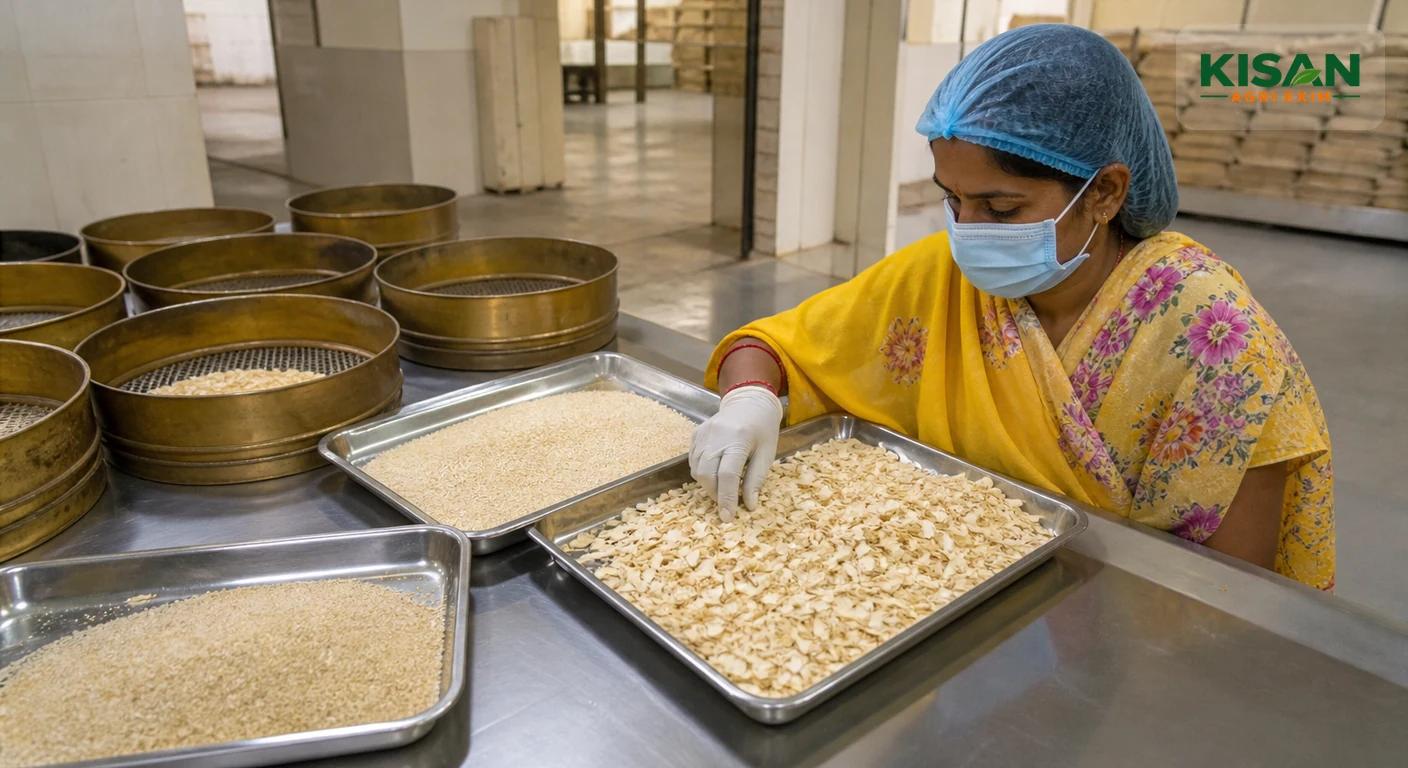
This distinction matters to food manufacturers, spice blenders and importers buying flakes, kibbled onion, granules or powder. Fresh-onion production alone does not establish suitability for dehydration: variety, dry matter, colour retention and access to processing infrastructure all affect the finished ingredient.
India is a significant supplier in the global dehydrated onion trade. A July 2025 industry estimate put India’s share at approximately 50% of global dehydrated onion exports. For buyers comparing origins within India, the practical question is less about which state grows more onions overall and more about which crop and supply chain can meet the required specification consistently.
Crop patterns and mandi ecosystems
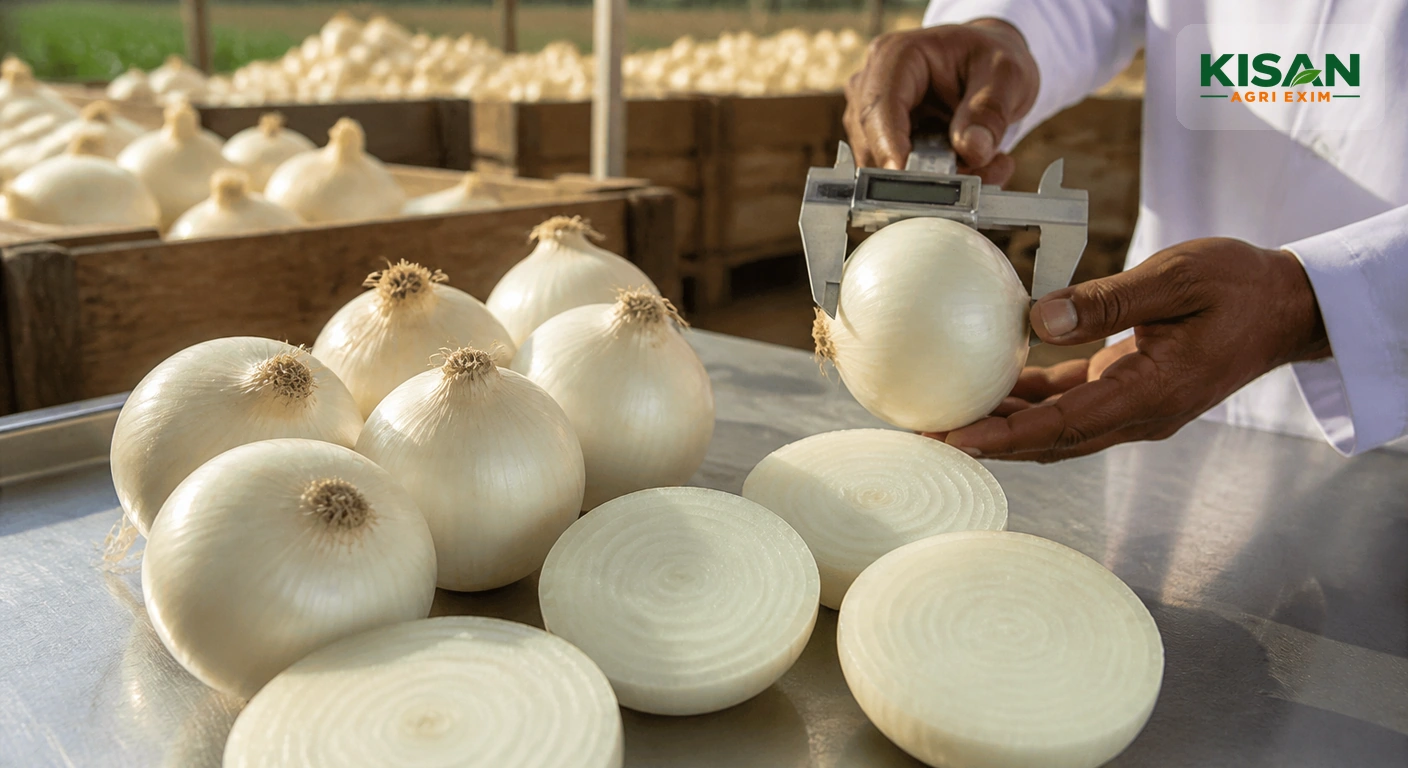
Gujarat’s Saurashtra belt is closely associated with white onion varieties used for industrial dehydration. These are predominantly grown in the rabi season, with harvests beginning in late winter and continuing into spring. White varieties are valued by processors for their dry matter and soluble solids, which support dehydration yield and a pale finished colour.
Fresh white onion arrivals in Gujarat were estimated at 920,000 MT for the 2025 rabi season, an advance estimate reported in July 2025. That figure describes fresh onion arrivals, not dehydrated output. In the same July 2025 report, the expected conversion of India’s fresh onion production into dehydrated onion was approximately 115,000 MT—also an advance estimate.
Mahuva and the wider Saurashtra region connect processing-grade crop supply with dehydration plants. A 2022 report described a substantial concentration of dehydration units in and around Mahuva; this is historical context, not a current count. The cluster supports a shorter link between farms, markets and processors than a supply chain that moves raw bulbs over long distances before processing.
Maharashtra’s principal onion belts, including Nashik, Pune and Ahmednagar, are known for red and pink onions serving fresh domestic and export markets. The state has kharif, late-kharif and rabi harvests, while the Lasalgaon and Nashik mandi ecosystem is oriented toward fresh-market auctions and distribution. These characteristics make Maharashtra important to India’s onion trade, but they do not make its fresh crop interchangeable with white dehydration feedstock.
Small quantities of red onion may be processed into red flakes or powders, and some specialty applications may favour those forms. For standard white flakes, minced onion, granules or powder, Gujarat’s white-crop and processing alignment is usually the more relevant comparison.
Processing, ports and sourcing trade-offs
The key commercial difference is the fit between crop, plant and product specification. White onion is the common choice for buyers seeking a light-coloured dehydrated ingredient. Red onion can suit a narrower set of applications, but pigmentation and colour change during processing can affect its suitability for a standard white specification.
Gujarat’s processing concentration also shapes procurement logistics. Saurashtra-based supply chains connect growing districts with dehydration operations and west-coast export gateways such as Pipavav and Mundra. This can reduce raw-material haulage and simplify movement from processing areas to port. Actual transit time and freight cost still depend on the plant, shipment plan, port booking and destination.
Maharashtra has established road, rail and port connections, including export routes through Jawaharlal Nehru Port (JNPT/Nhava Sheva). Its mandi network is designed around moving fresh onions to wholesale markets and consumption centres. For dehydrated onion, a buyer should distinguish these fresh-onion logistics from the availability of processing-grade feedstock and local dehydration capacity.
A 20-foot full container load of dehydrated onion packed in 25 kg cartons is commonly described as holding roughly 12–14 MT. This is a general loading reference, not a substitute for a shipment plan: the final payload depends on the product, packaging and container configuration.
For procurement teams, compare origins against the finished ingredient rather than the state name alone. Define colour, cut form, mesh where relevant, moisture and microbiological requirements first. Then evaluate crop suitability, processing controls, available volume and the route from plant to port. Gujarat is the more established match for standard white dehydrated onion; Maharashtra may be relevant when a red-onion ingredient or a specific fresh-crop sourcing strategy is required.
Conclusion
For buyers of standard white dehydrated onion, Gujarat offers the clearest alignment between crop type, processing cluster and export logistics. Maharashtra’s strength lies primarily in fresh red-onion markets, with dehydrated sourcing most relevant when the application specifically calls for red varieties. Procurement managers, QA leads and supply chain directors should qualify the origin against the required finished-product specification and route.
Next Step
See specifications and cut forms in our dehydrated onion range or dehydrated garlic range, or talk to our export sales desk to get tailored product specifications and custom bulk pricing for your market.
FAQs
Is Gujarat or Maharashtra better for white dehydrated onion?
Gujarat is generally the more direct sourcing base for standard white dehydrated onion because its rabi crop includes white processing varieties and its Saurashtra belt has a concentrated dehydration industry. Maharashtra is more strongly oriented toward fresh red-onion markets.
Can Maharashtra red onions be used for dehydration?
Red onions can be processed into products such as red flakes or powder for suitable applications. Their colour and processing behaviour differ from white onion, so they are not a direct substitute when a buyer’s specification requires a pale white ingredient.
What should buyers compare when sourcing dehydrated onion by origin?
Compare the required colour and cut form, crop suitability, processing controls, available supply and route from plant to port. Fresh onion arrivals or mandi activity alone do not establish that a supplier can meet a dehydrated-product specification.
Ready to source?
Looking for a reliable export partner?
Our export team responds within 24 hours to help you with your bulk sourcing and custom quotation requirements.