

Why Global Food Manufacturers Prefer Dehydrated Onion Over Fresh
Key Takeaway
Global food manufacturers prefer dehydrated onion because it eliminates preparation waste, provides year-round flavor consistency, extends shelf life to 24 months, and reduces transport weights by over 80% compared to fresh or frozen onions.
For high-volume food processors, choosing the right form of onion as a raw material is a critical operational decision. While fresh onions are a staple in kitchens, industrial food production lines demand consistency, long shelf life, and predictable cost-in-use.
This guide breaks down the comparison between fresh, frozen, and dehydrated onion, and explains why global manufacturers are steadily transitioning to dehydrated formats.
Comparing onion formats: Fresh vs. Frozen vs. Dehydrated
| Parameter | Fresh Onion | Frozen (IQF) Onion | Dehydrated Onion |
|---|---|---|---|
| Shelf Life | 1–3 weeks (refrigerated) | 6–12 months (frozen) | 12–24 months (ambient) |
| Preparation Waste | 15–20% (peel, roots, rejects) | 0% (pre-cut) | 0% (100% usable product) |
| Moisture / Shipping Weight | ~88% water (high freight cost) | ~88% water (refrigerated freight) | ≤6% moisture (lightweight, ambient) |
| Price Stability | High volatility (seasonal spikes) | Moderate volatility | Stable, predictable contract pricing |
| Labor & Handling | Peeling, washing, chopping required | Thawing, sanitary handling required | Direct addition, no prep needed |
Core benefits of dehydrated onion in food processing
1. Superior cost-in-use savings
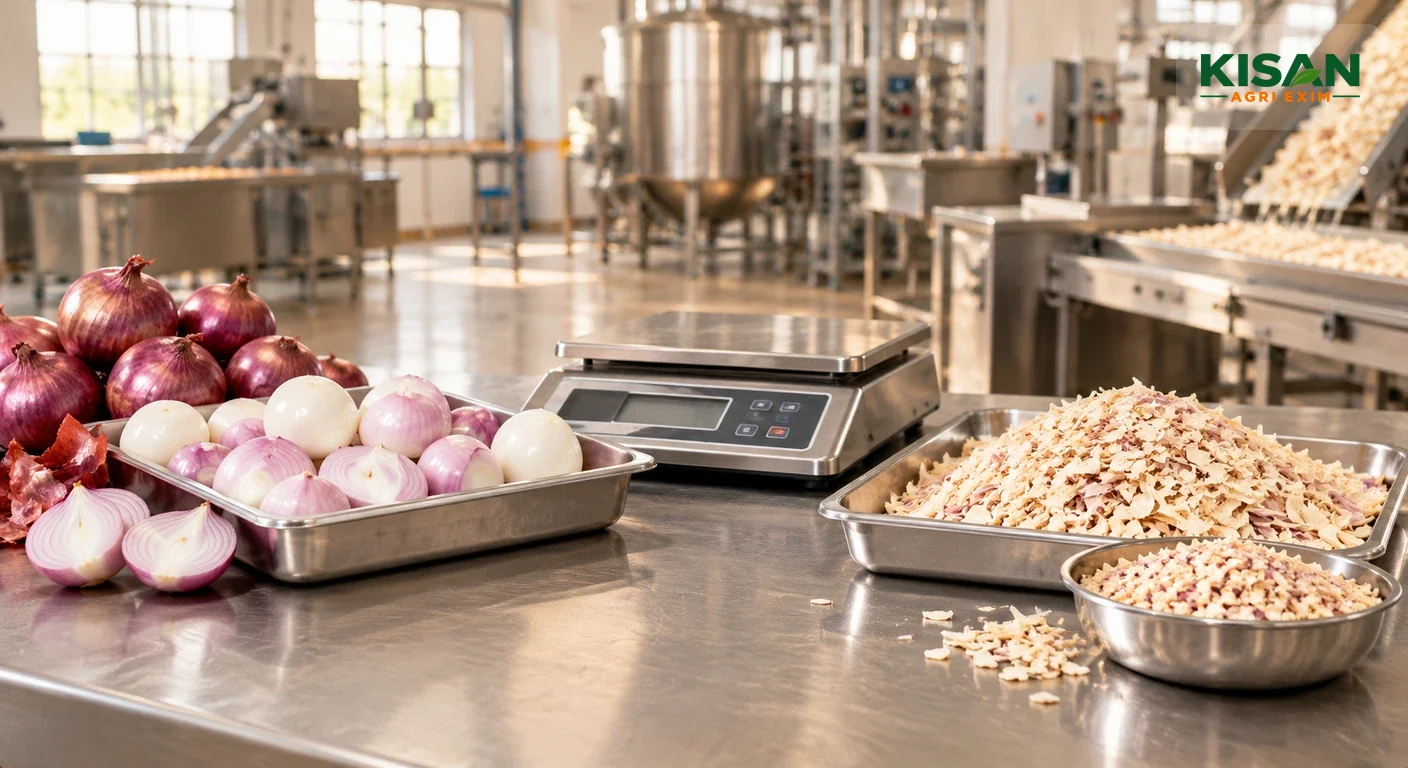
Fresh onions contain approximately 88% water. When you buy fresh, you are paying to ship, store, and process water that is eventually evaporated during cooking. With dehydrated onion, 1 kg of kibbled/flake format replaces approximately 8 to 10 kg of fresh raw onion, eliminating water weight and pre-processing waste.
2. Flavor and specification consistency
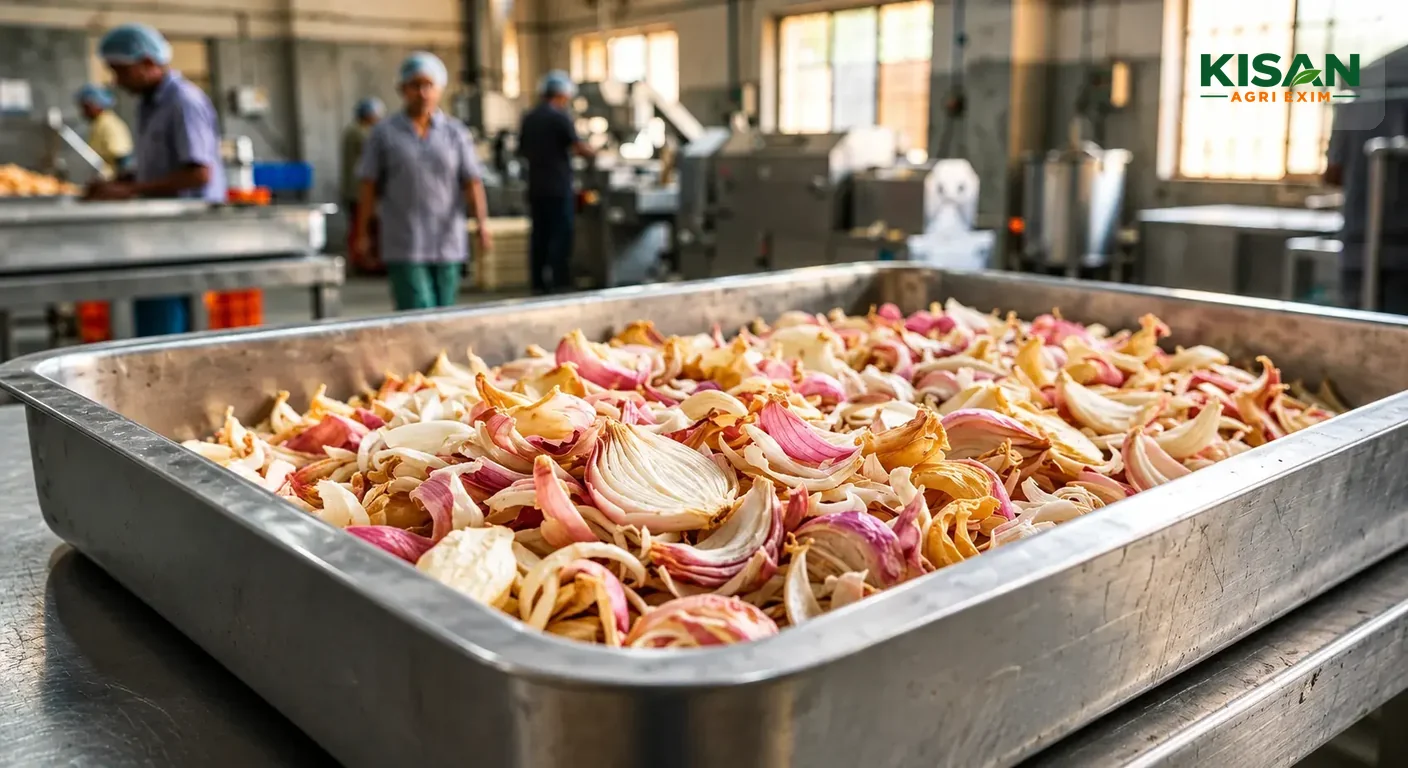
Industrial recipes require exact replication. Fresh onions vary wildly in pungency, sugar content, and water percentage depending on the season and origin. Dehydrated onion is processed under controlled temperatures, locking in a standardized flavor, color grade, and microbiological profile year-round.
3. Simplified logistics and storage
Unlike fresh onions which rot easily, or IQF onions that require energy-intensive cold chain storage, dehydrated onion is shelf-stable at ambient temperatures. It reduces warehouse footprint and lowers transport emissions due to its low weight.
Common industrial applications
Dehydrated onion is highly versatile and serves as a foundational ingredient across several sectors:
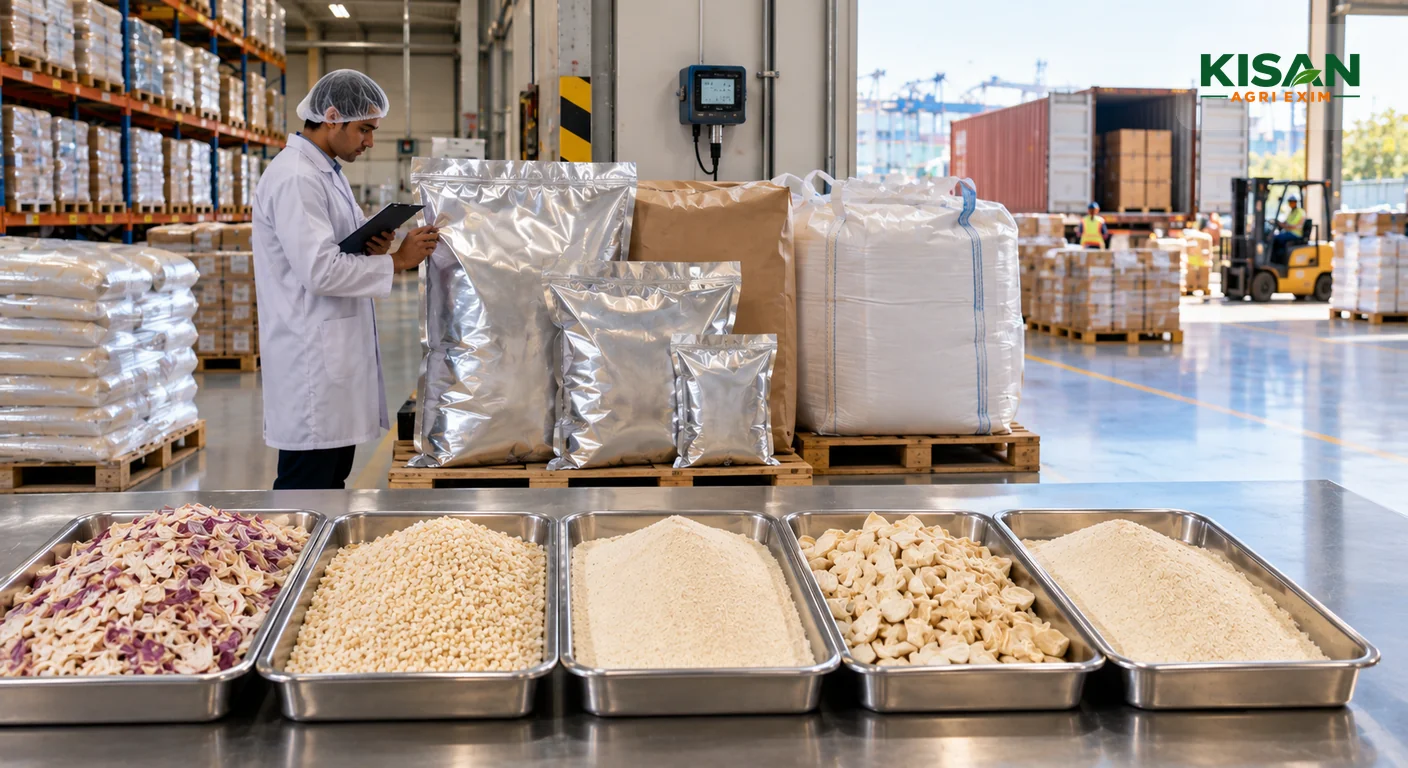
- Snack Foods: Powder and fine granules are used in topical seasonings, dry rubs, and snack coatings (e.g., sour cream & onion chips).
- Soups & Sauces: Kibbled onion rehydrates perfectly in liquid-based preparations like canned soups, pasta sauces, and gravies.
- Spice Blends & Seasonings: Granules and powder act as anti-caking flavor carriers in bulk seasoning formulations.
- Ready-to-Eat Mixes: Dehydrated onion flakes are essential for dry instant noodle seasoning packets and quick-prep meal kits.
Why buyers switch to dehydrated formats
Importers and production managers typically initiate the switch from fresh or frozen to dehydrated onion when they face:
- Rising labor costs associated with peeling, washing, and chopping fresh onions.
- Strict sanitation audits where handling raw dirt-covered fresh produce in the processing facility poses cross-contamination risks.
- Freight cost inflation that makes shipping water-heavy fresh or frozen goods financially unviable.
Sourcing from Kisan Agri Exim
Located in Mahuva, Gujarat—the hub of onion cultivation in India—KISAN AGRI EXIM processes premium-grade onions under strict quality control. Our facility ensures that onions are dried at low temperatures to retain their natural pungency, sweet profile, and color.
We export dehydrated onion flakes (kibbled), minced, granules, and powder in standard 25 kg multi-layer moisture-barrier packaging.
Conclusion
For food manufacturers operating at scale, dehydrated onion delivers measurable advantages over fresh and frozen alternatives: an 80%+ reduction in shipping weight, zero preparation waste, 12–24 month ambient shelf life, and year-round price and flavor consistency. The transition from fresh to dehydrated is not a compromise — it is an operational upgrade that simplifies logistics, reduces labor dependency, and stabilizes input costs across production cycles.
Next Step
See cut forms and specifications in our dehydrated onion range or talk to our export sales desk to get tailored product specifications and a custom bulk quote for your market.
FAQs
What is the yield ratio of dehydrated onion to fresh onion?
Typically, the yield ratio is 1:8 to 1:10. This means that 1 kg of dehydrated onion kibbled or powder delivers the equivalent flavor and solids of 8 to 10 kg of fresh raw onions.
Does dehydrated onion require refrigeration during transit?
No. Dehydrated onion is shelf-stable and has a moisture level of ≤6%. It can be shipped and stored in ambient dry conditions, saving energy and cold chain logistics costs.
What is the shelf life of bulk dehydrated onion?
When stored in its original sealed, moisture-barrier packaging in a cool, dry place, dehydrated onion has a shelf life of 12 to 24 months.
Ready to source?
Looking for a reliable export partner?
Our export team responds within 24 hours to help you with your bulk sourcing and custom quotation requirements.