

Dehydrated Garlic Supplier Types
Key Takeaway
Integrated processors and garlic specialists suit buyers prioritising production control and traceability, while multi-product dehydrators can support larger programmes across ingredients. Merchant exporters are often a better fit for smaller trial orders or consolidated shipments, but buyers should manage source and batch variability.
Choosing a Dehydrated Garlic Supplier in India
The right dehydrated garlic supplier depends on the balance your business needs between volume, specification control, traceability and minimum order quantity. Integrated processors and garlic specialists offer closer control of production; multi-product dehydrators can serve broad ingredient programmes, while merchant exporters often provide more flexible order consolidation.
India’s supply base includes processing facilities that handle garlic from raw bulb preparation through drying and packing, as well as exporters that source finished products from mills. These operating models affect how easily a buyer can connect a finished lot to its production source, maintain a repeat specification and plan replenishment.
For procurement teams, supplier fit is a commercial decision as much as a product decision. A full-container programme with tight particle-size requirements calls for a different operating partner from a pilot order or a mixed-ingredient shipment. Define the required form, physical and microbiological limits, documentation and order cadence before comparing offers.
Four Supplier Types and Their Best Fit
Integrated processors
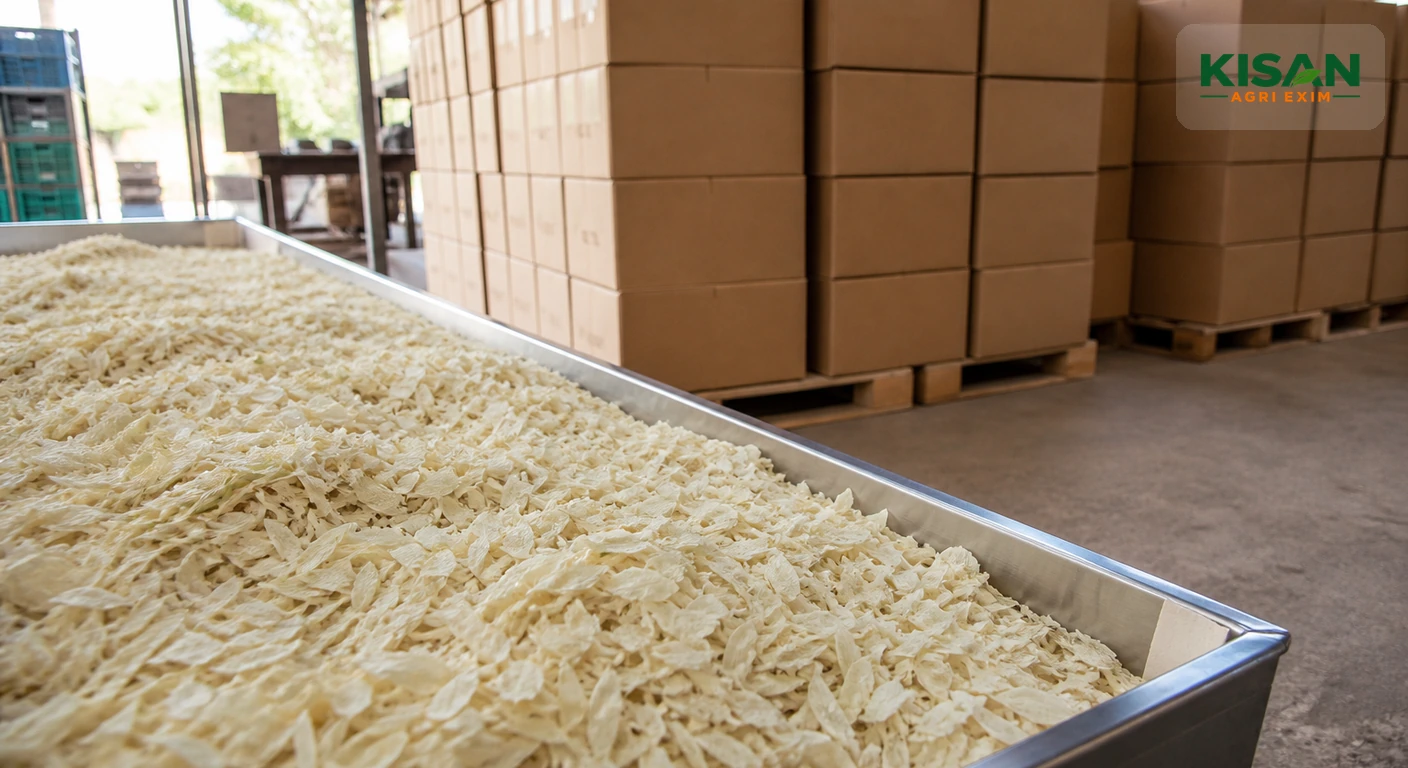
Integrated processors manage multiple stages of production, from preparing and cutting garlic to drying, sorting and packing. With processing steps under common operational control, they are well suited to buyers needing repeatable specifications, production-lot records and ongoing commercial volumes.
This structure can help link incoming raw material to finished-product batches. It also allows process settings such as slice geometry and drying conditions to be managed within the production operation. For buyers with demanding particle-size, colour or pungency requirements, direct access to production and batch records is valuable.
Integrated production is generally geared toward substantial orders and planned supply programmes. It is a strong fit when continuity and specification control matter more than buying a small quantity.
Garlic specialists
Garlic specialists dedicate their production to garlic rather than switching between it and other dehydrated crops. That focus suits buyers seeking a dedicated garlic process and tighter control over characteristics such as pungency, colour and cut consistency.
Specialisation can also reduce the risk of flavour carryover from other crops. It does not remove the need for documented cleaning, product testing or lot-level traceability, but it makes the production model a natural fit for garlic-focused import programmes.
These suppliers can offer predictable seasonal allocations, though buyers still need to align purchasing plans with crop and production schedules.
Multi-product dehydrators
Multi-product dehydrators process garlic alongside other ingredients, commonly including onion. Their broad product range can suit importers managing several dehydrated ingredients through one procurement programme and buyers with substantial recurring demand.
The main quality consideration is production changeover. Garlic runs may follow other products, so line clearance, dry sanitation and air-handling controls matter. Buyers with strict flavour, colour or contamination requirements should review how changeovers are managed and how the facility verifies that cleaning is effective.
This model is most suitable when the supplier can demonstrate controlled production transitions and the buyer’s order size supports scheduled manufacturing campaigns.
Merchant exporters
Merchant exporters source finished garlic flakes, chopped products or powder from processing mills and manage commercial and export logistics. They can be useful for trial quantities, less-than-container-load shipments and consolidated orders across different products.
The trade-off is reduced direct control over manufacturing. An exporter may source from more than one plant to fulfil a requirement, which can complicate consistency and traceability. Buyers should establish the producing facility and batch identity for each shipment, rather than relying only on the exporting company’s documents.
Match the Supplier Model to Specifications and Order Size
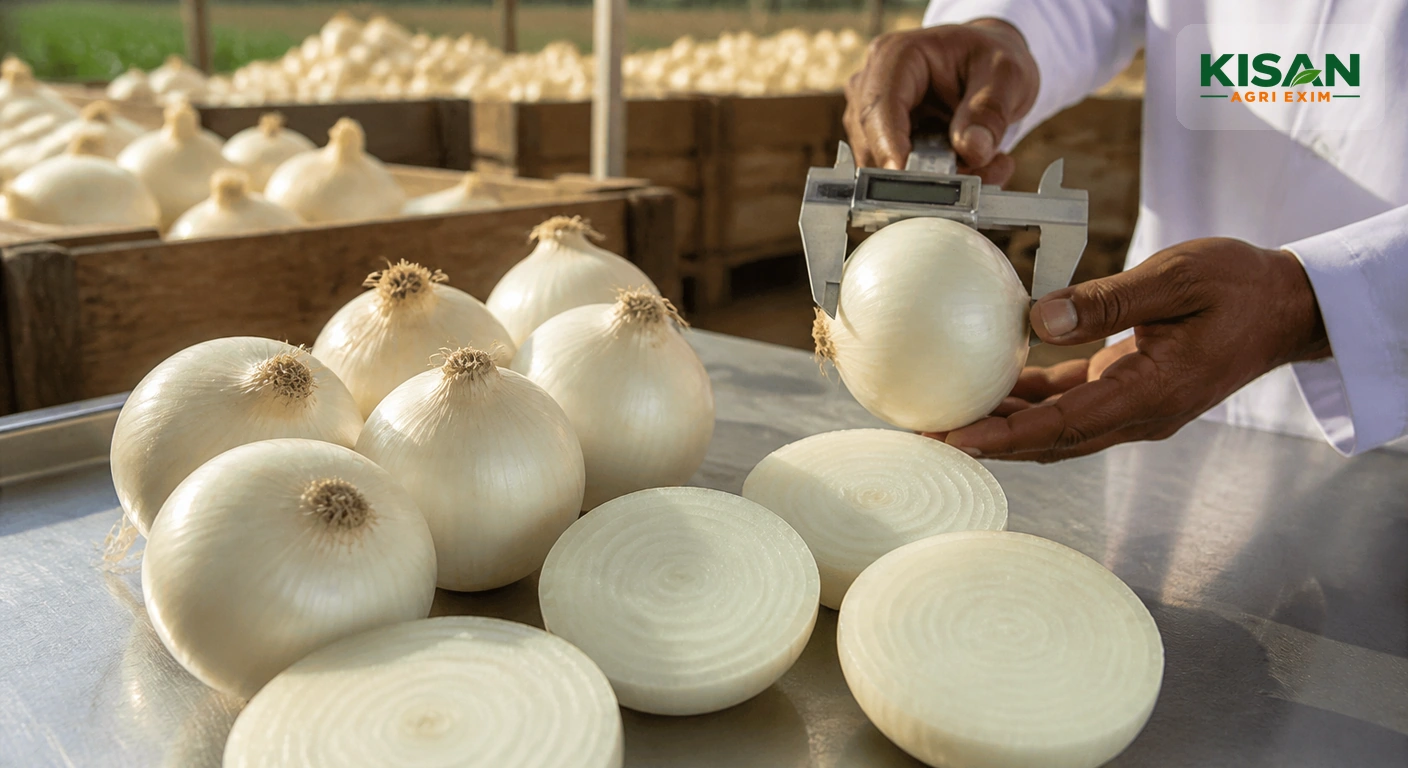
Supplier selection should begin with the product specification, not the catalogue description. Dehydrated garlic is sold in forms such as flakes, chopped pieces and powder, and each requires clear physical limits. Export dehydrated garlic flakes are specified with particle cuts of 3–8 mm, while powder specifications may use mesh size; the required distribution depends on the application.
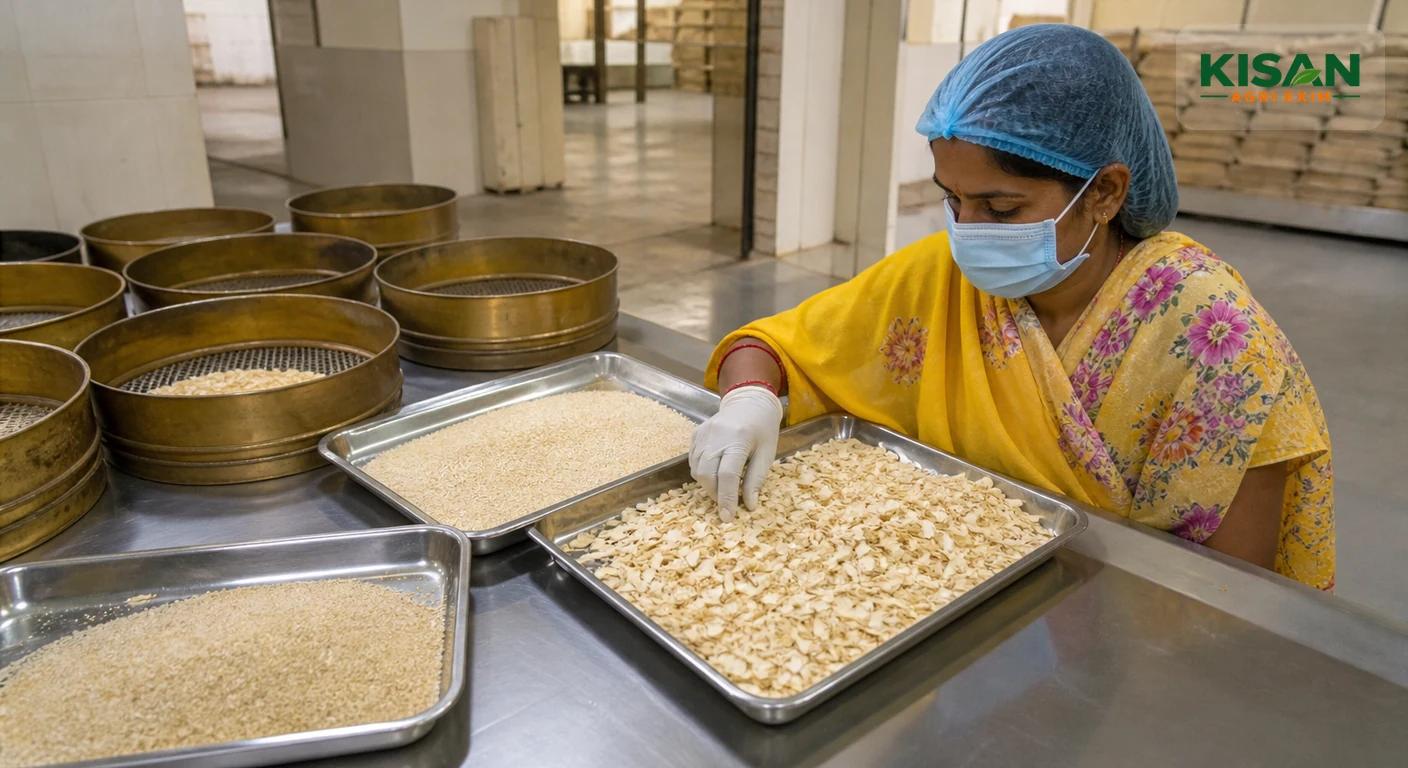
Moisture, purity, colour and microbiological criteria also shape supplier fit. For example, some Indian supplier catalogues list a minimum purity of 99% for dehydrated garlic flakes, and some list total allicin content of at least 0.1% for high-allicin grades. These are examples of individual suppliers’ specifications, not industry-wide standards, and they do not guarantee that every product or shipment will meet them, so buyers should agree the limits with their supplier. A certificate of analysis should state the tested batch and the agreed limits.
Microbiological acceptance needs the same batch-level attention: one supplier’s product specification, for example, lists a total plate count limit of 100,000 cfu/g, but this is an individual supplier’s figure, not an industry-wide export threshold. Buyers should include the required limit, test method and pathogen criteria in their purchase specification rather than treating a general product sheet as proof of shipment compliance.
The supplier model also affects order economics. Integrated processors and larger multi-product facilities are typically organised around substantial commercial runs, while merchant exporters can combine smaller lots or products. Garlic specialists may allocate volume around the crop and production season. The practical MOQ therefore depends on the cut form, specification, production schedule and shipment plan.
Questions that separate supplier models
Two questions clarify most sourcing decisions:
- Who produced the material, and can the shipment lot be traced to that facility and batch? This is central when traceability and repeatability are priorities.
- How will the supplier demonstrate that the specification is met for this lot? The answer should connect the agreed product limits to batch testing and shipment documentation.
For buyers handling garlic flakes, storage after processing also matters. Export-grade dehydrated garlic flake packaging guidance recommends sealed storage below 25 °C to protect the product from humidity. This is especially relevant where shipments pass through intermediate storage or handling before use.
Conclusion
Integrated processors and garlic specialists are the strongest fit when process control, repeat specifications and traceability lead the buying decision; multi-product dehydrators suit larger, broader ingredient programmes, while merchant exporters offer flexibility for smaller or consolidated orders. Procurement managers, QA leads and supply chain directors should choose the supplier model that matches their specification, lot-traceability needs and order cadence.
Next Step
See specifications and cut forms in our dehydrated onion range or dehydrated garlic range, or talk to our export sales desk to get tailored product specifications and custom bulk pricing for your market.
FAQs
Which dehydrated garlic supplier type offers the most traceability?
Integrated processors and primary processing facilities are generally best placed to provide a direct link between incoming raw material, production batches and packed lots. The buyer should confirm that lot records identify the production facility and shipment batch.
Are merchant exporters suitable for small dehydrated garlic orders?
Yes. Merchant exporters can be a practical option for trial quantities, less-than-container-load shipments or consolidated orders. Their sourcing may involve multiple mills, so lot identity and batch-specific test documentation are important.
What should a dehydrated garlic specification include?
Specify the product form and particle or mesh requirements, along with moisture, purity, colour, microbiological criteria and any required sensory or chemical attributes. Set the acceptance limits and batch documentation requirements in the purchase specification.
Ready to source?
Looking for a reliable export partner?
Our export team responds within 24 hours to help you with your bulk sourcing and custom quotation requirements.