Onion Export Bans and Dehydrated Buyers
Key Takeaway
Indian export restrictions on fresh onions do not automatically apply to dehydrated onion, because trade rules use product-specific tariff classifications. Buyers should confirm the current rule for the exact product code and reduce supply risk through advance qualification, formulation trials and clear quality controls.
Why Fresh Onion Export Bans Matter to Dehydrated Buyers
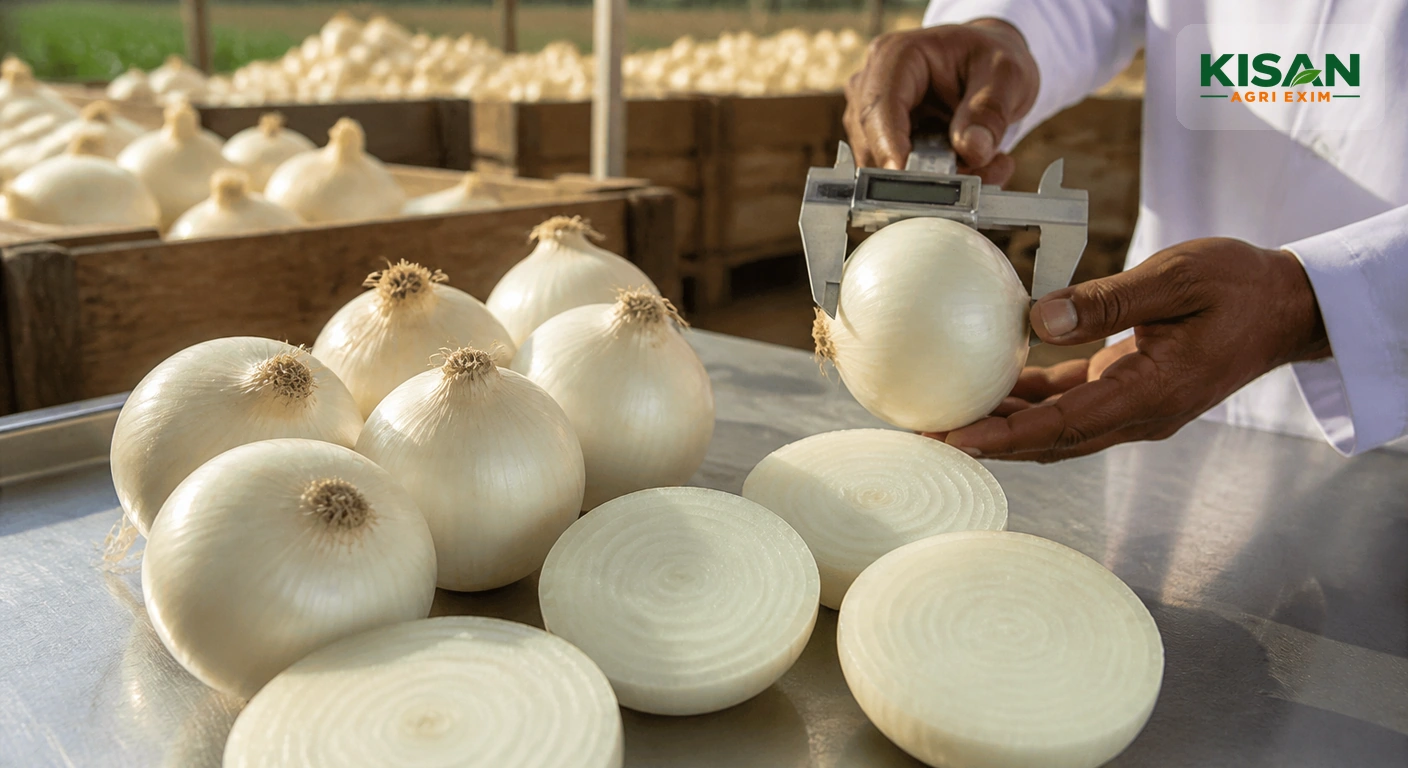
Indian export restrictions on fresh onions do not automatically apply to dehydrated onion. Export policy is tied to product classifications: fresh onions and dried onion products can sit under distinct tariff lines, so buyers must verify the rule for the exact product and classification rather than assume a fresh-onion ban covers every form.
Fresh-onion restrictions are generally used to address domestic availability and food-supply concerns. Measures such as export prohibitions, minimum export prices and export duties can affect fresh shipments, and dried products are not always outside their scope: in 2023, a minimum export price briefly covered dried onion as well, while the export ban that followed it did not. Each notification has to be read for the product codes it lists, and none guarantees that dehydrated onion is exempt from future trade interventions.
For food manufacturers, the commercial question is broader than whether a product can clear customs. Dehydrated onion production still depends on agricultural raw material, so a disruption in fresh markets can affect the wider supply environment even when processed exports remain permitted. Buyers need to plan for both regulatory eligibility and continuity of supply.
Fresh Onion Rules and Dehydrated Product Classifications
Export authorities regulate products according to tariff classifications, not simply their botanical source. Fresh or chilled onions and dried or dehydrated onion products are classified separately. Whether a notification affects dried onion products depends on whether it lists their tariff line, not on whether it is described as an onion measure.
The 2023 measures show both outcomes. DGFT Notification 42/2023, dated 28 October 2023 and effective from 29 October, imposed a minimum export price of US$800 FOB per metric ton until 31 December 2023, and listed dried onions under HS 0712 20 00 alongside fresh onions under HS 0703 10 10. Notification 45/2023 superseded it on 23 November 2023 and kept the same minimum export price for HS 0703 10 19 only, so dried onion was no longer covered. Notification 49/2023, dated 7 December 2023, then prohibited onion exports until 31 March 2024, again only under HS 0703 10 19, a fresh onion line; dried onion under HS 0712 20 00 was not listed. Dried onion was therefore subject to the price floor only while Notification 42/2023 was in force, and never to the prohibition. Neither establishes the status of a current shipment: policy can change, and the applicable official notification must be checked against the precise product form and tariff item.
That distinction has a practical limit. Separate classification can preserve a route for exporting processed product, but it cannot insulate processors from all upstream effects of a fresh-market disruption. Raw material availability and operating schedules remain connected to agricultural supply. Buyers should treat regulatory exposure and ingredient availability as related, but different, risks.
Procurement Controls When Fresh Onion Exports Are Restricted
A disruption is a poor time to begin supplier qualification. Technical review, samples and factory approvals can delay a change in sourcing, so buyers benefit from approving dehydrated onion specifications before a fresh supply interruption occurs. The approved specification should match the intended product matrix and manufacturing process.
Product form determines how well dehydrated onion can replace a fresh ingredient:
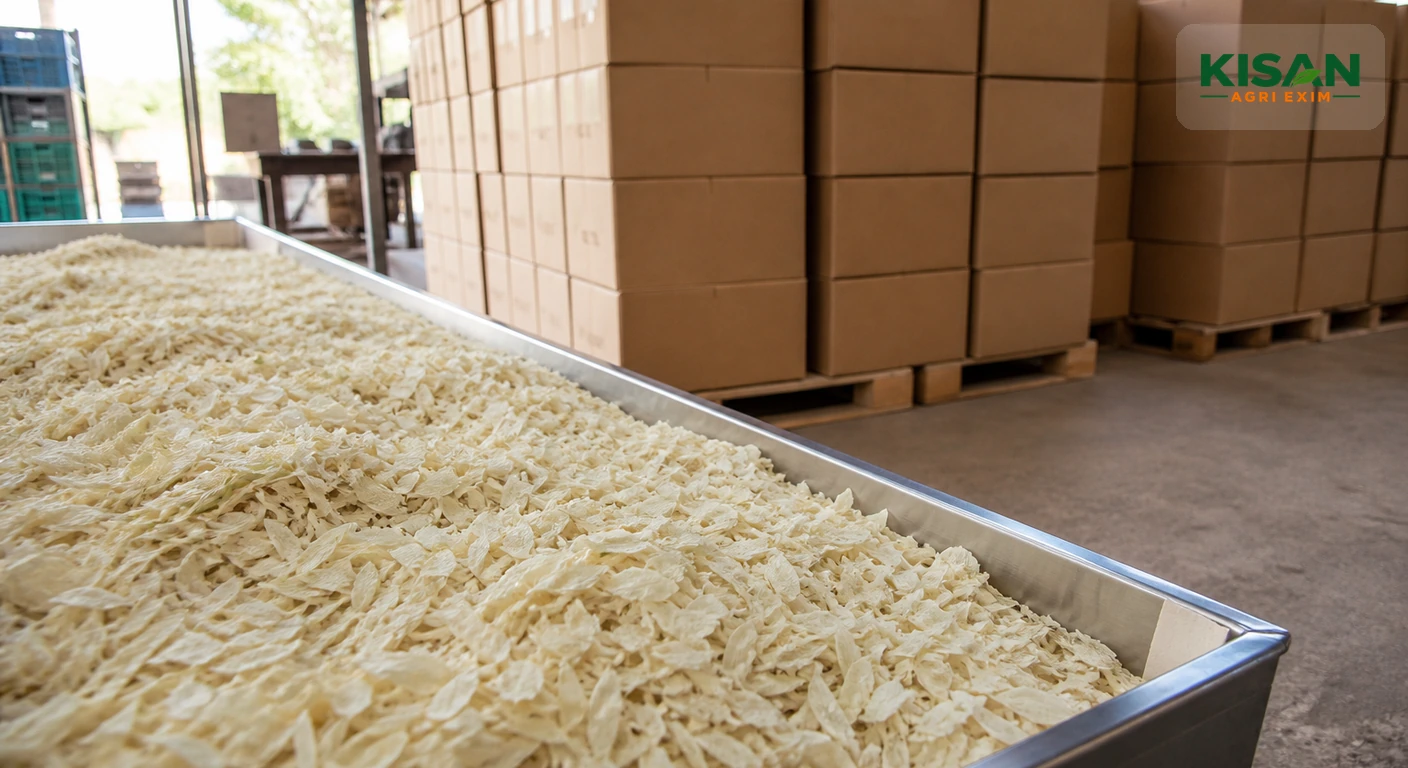
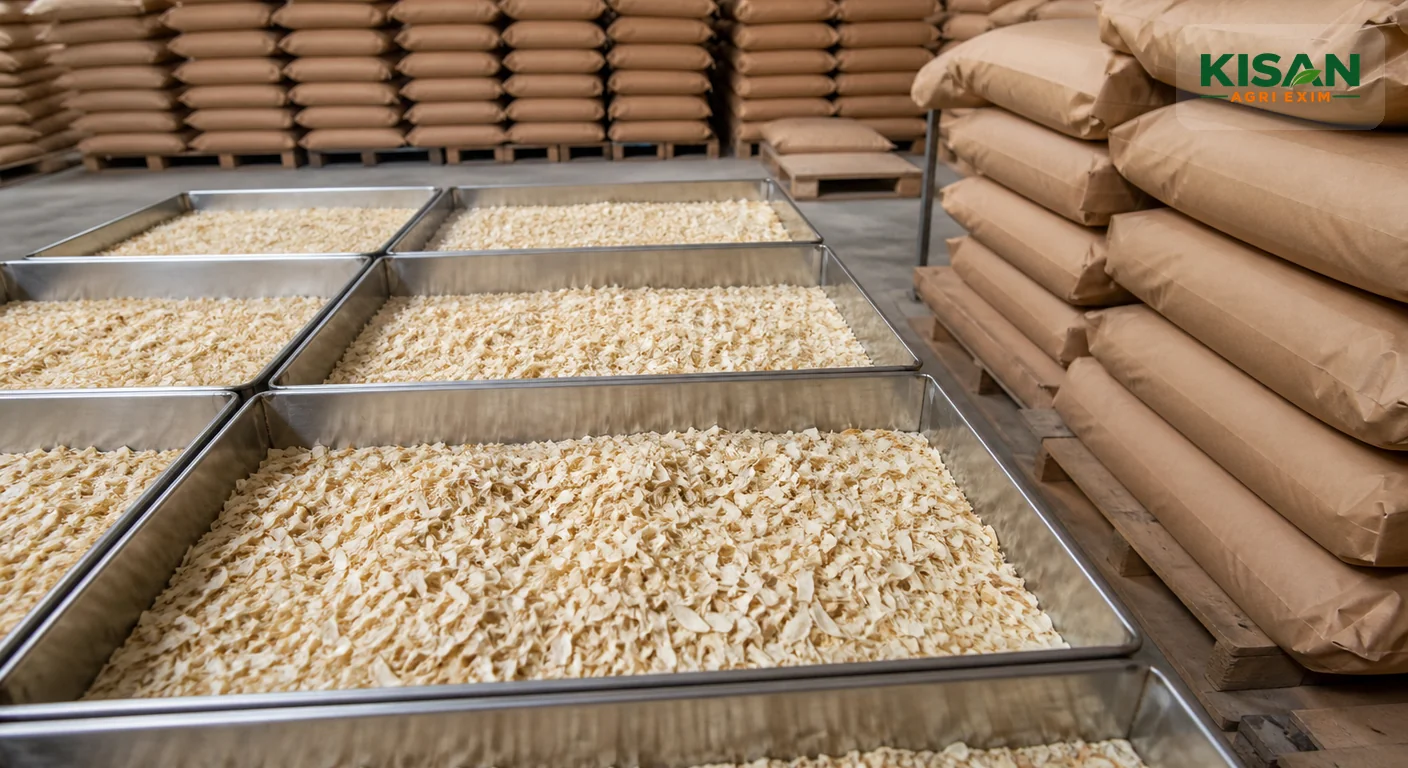
- Kibbled or chopped pieces can rehydrate in soups, sauces and prepared meals where visible onion pieces are required.
- Minced onion can disperse through fillings, dressings and emulsified products where a smaller particle is suitable.
- Granules and powders blend into seasonings, gravies and dry bases when a uniform onion flavour is preferred.
- Fresh onion remains necessary for applications that depend on raw texture, crisp garnish or whole fresh produce.
Dehydrated onion is not a direct mass-for-mass replacement for fresh onion. Its concentrated solids and flavour require formulation trials to establish the right dosage, water addition and processing conditions. Trials should assess the finished product’s flavour, texture, appearance and process performance.
Quality controls matter because dehydrated ingredients may enter dry blends or other applications without a later heat-treatment step. Buyers should define microbiological acceptance criteria and moisture requirements in the product specification, then verify them through suitable documentation and testing. Packaging integrity also matters: dehydrated onion can absorb moisture during transit if its moisture barrier is compromised.
Contracts and customs documentation should make the product identity and applicable tariff classification explicit. Clear wording on how a change in export conditions affects shipment obligations can reduce disputes, while accurate declarations help avoid delays caused by vague descriptions or mismatched codes. Before shipment, buyers should confirm the current official notification and customs requirements for the exact product form.
Conclusion
Fresh onion export bans and restrictions do not automatically apply to dehydrated onion, but separate classification is not a guarantee of uninterrupted supply or unchanged policy. Procurement managers, QA leads and supply chain directors should qualify products in advance, validate formulations, set microbiological and moisture controls, and confirm the current rules for the exact tariff item.
Next Step
See specifications and cut forms in our dehydrated onion range or dehydrated garlic range, or talk to our export sales desk to get tailored product specifications and custom bulk pricing for your market.
FAQs
Does an Indian fresh onion export ban automatically cover dehydrated onion?
Not automatically. Fresh onions and dehydrated onion products sit under separate tariff classifications, and each notification states which ones it covers. The December 2023 prohibition covered a fresh onion line only, but for about four weeks before that, from 29 October to 23 November 2023, a minimum export price also covered dried onion. Buyers should verify the current official notification for the exact product form and tariff item.
Can dehydrated onion replace fresh onion in every food application?
No. Dehydrated onion can suit cooked foods, seasonings and other applications where rehydrated pieces or onion flavour are appropriate. It cannot provide the raw texture or crispness required in fresh garnishes and salads.
How can buyers reduce the risk of delays during an export restriction?
Qualify the product and supplier before disruption, run formulation trials, specify quality and microbiological requirements, and use accurate product descriptions and tariff classifications in contracts and customs documents. Confirm the applicable export conditions before shipment.
Ready to source?
Looking for a reliable export partner?
Our export team responds within 24 hours to help you with your bulk sourcing and custom quotation requirements.