

Mandi Prices and Dehydrated Onion Costs
Key Takeaway
Mandi prices influence dehydrated onion costs through the price and availability of fresh white onion, but export quotations do not adjust immediately. Buyers should track APMC arrivals and modal prices alongside crop reports, weather and the timing of finished-goods quotations.
How Mandi Prices Shape Dehydrated Onion Costs
APMC mandi prices affect dehydrated onion costs by setting the physical market reference for fresh white onion, while arrivals and crop conditions influence how much suitable raw material reaches processors. The effect on export quotations is delayed: processing, inventory blending and finishing mean a container price does not necessarily mirror the latest auction.
For buyers, the key is to read price movement with its context. A falling mandi price during peak arrivals can signal improved raw-material availability, but it does not guarantee an immediate fall in dehydrated onion quotations. Arrival volumes, bulb quality, weather and the timing of processing all shape how a harvest translates into finished-product supply.
This matters especially in India’s Saurashtra region, where Mahuva is a principal centre for white onion trade and dehydration. Industry reporting in 2022 placed nearly 120 of the 160 dehydration units operating across the region in and around Mahuva. That concentration makes Mahuva market signals useful to international buyers following Indian supply, while still requiring attention to crop and quality conditions.
APMC Arrivals, Gluts and Crop Reports
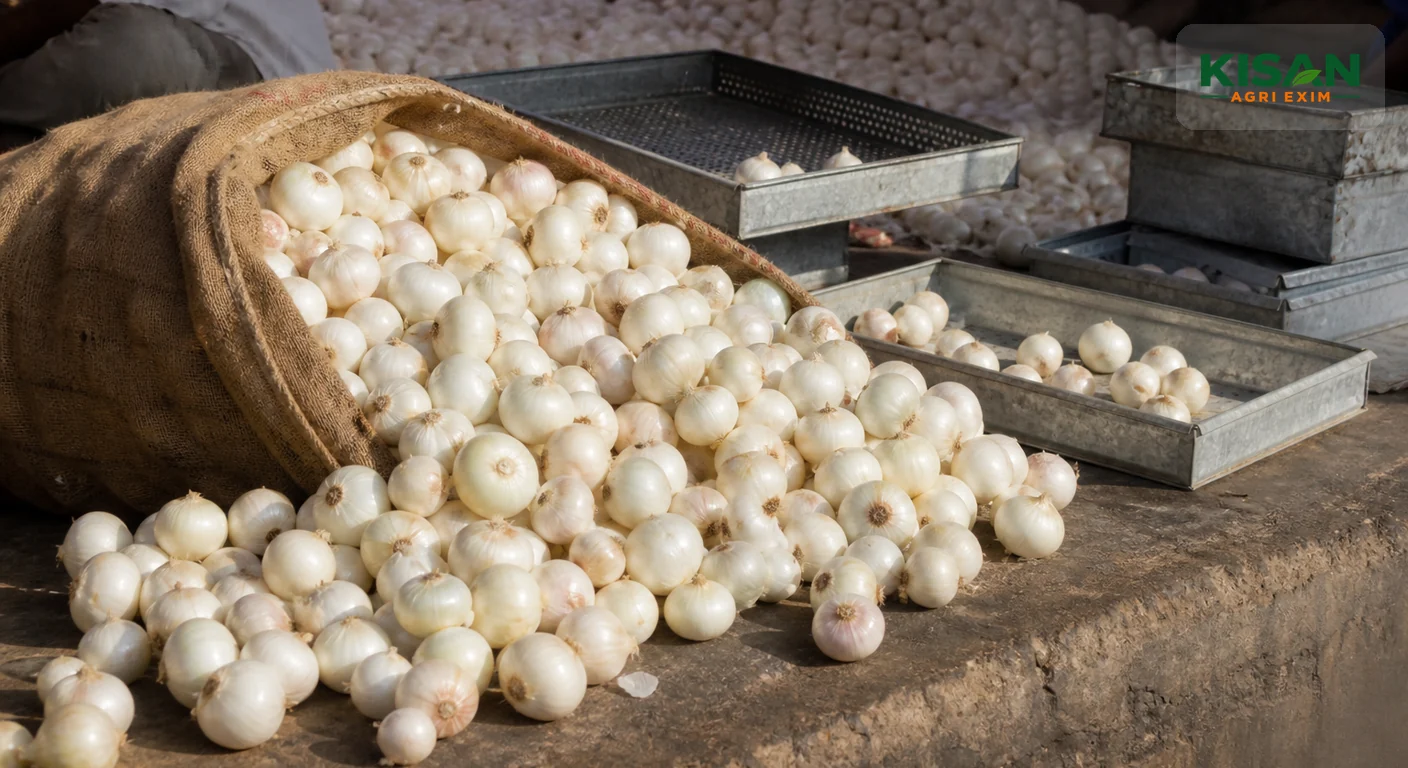
Daily APMC auctions establish a reference for physical onion procurement. When arrivals rise during harvest, more raw material is available to the market and auction prices may soften. A glut can support higher processing throughput, but the effect on export quotations depends on whether the incoming crop is suitable for dehydration and how quickly processors can convert and release finished goods.
The 2025 Gujarat crop illustrates the scale of the supply signal: fresh onion arrivals were estimated at 920 KMT, approximately 15% higher than the comparison period. The same report projected that fresh Indian onion production could yield approximately 115 KMT of dehydrated onion. These figures indicate why crop reports and arrival data matter to buyers tracking potential supply—not just the quoted price on a single trading day.
Mahuva prices also show how a seasonal market can move as arrivals conclude. Toward the close of the 2025 arrival season, reported raw white onion spot prices ranged from $127/MT to $174/MT. The range is a snapshot of that period, not a year-round benchmark. For routine monitoring, the modal APMC price—the most frequently recorded auction price—offers a more useful reference than a daily high or low.
Crop forecasts should be read alongside actual arrivals and field conditions. Estimates can diverge from the volume that reaches the market when post-harvest weather affects crop quality or usable supply. For buyers, a report of a large crop is therefore a signal to follow, not a substitute for checking how arrivals and market prices are developing.
Why Export Quotations Lag Mandi Prices
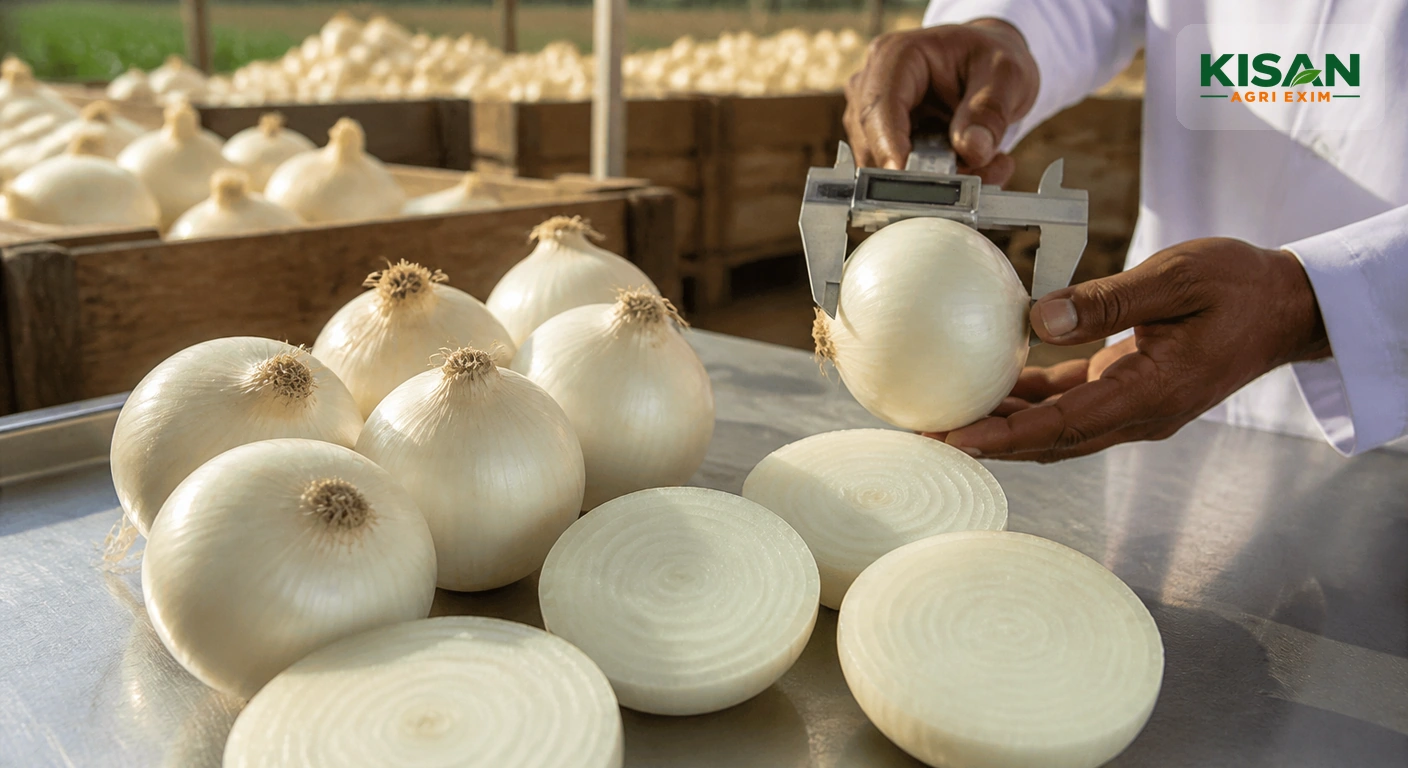
A mandi auction is a point-in-time signal; a dehydrated onion export quotation reflects material processed and held over a longer period. Raw bulbs must be sorted, washed, peeled, sliced and dried before they become stable dehydrated products. Inventory acquired across different auction weeks may be blended, so finished goods can represent an average of earlier market conditions rather than the latest spot rate.
Quality can also offset a low raw-material price. Late-season or rain-affected arrivals may have lower dry matter, poorer field curing or more damage, affecting usable output and finished-product quality. Buyers should interpret a low mandi price together with crop condition, weather and product requirements rather than treating it as a direct forecast of finished-goods pricing.
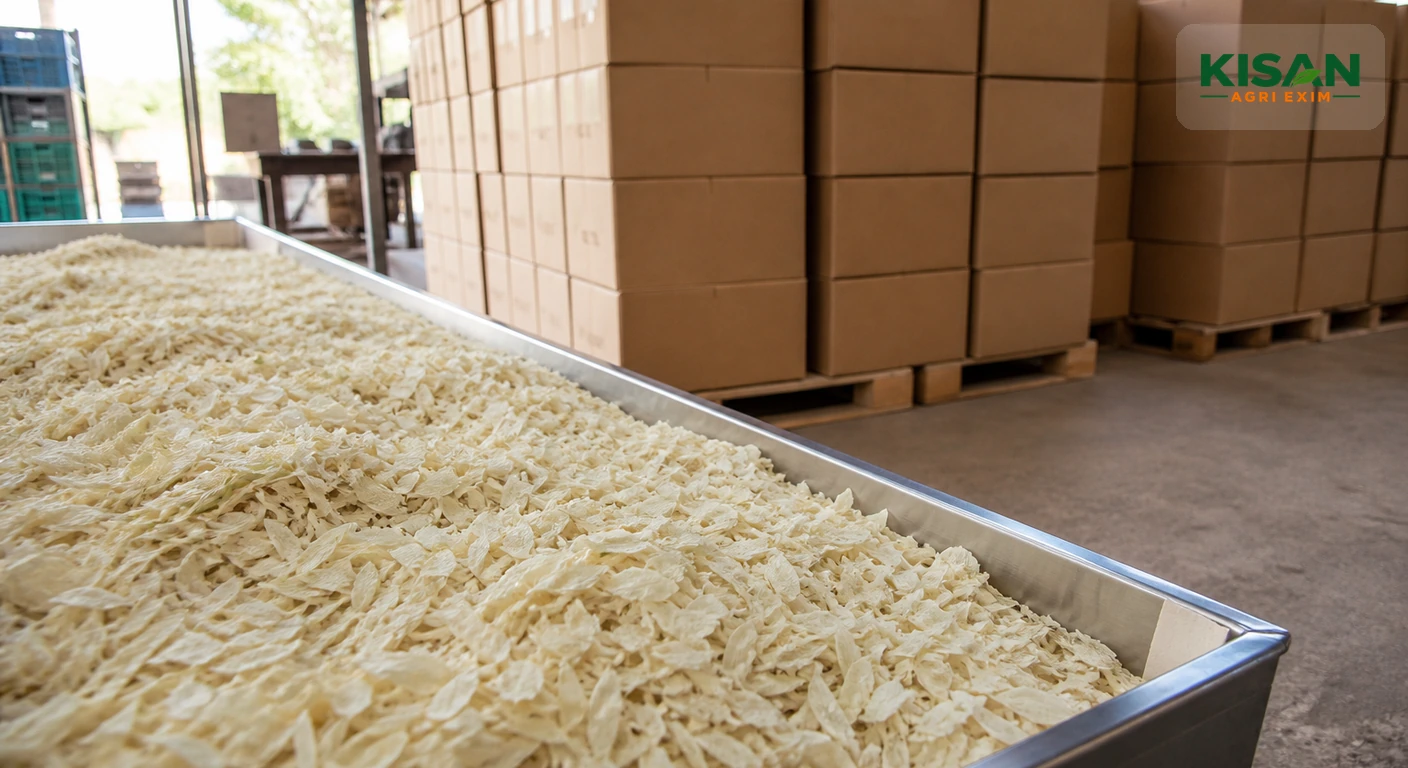
Further processing creates another timing gap. Dehydrated onion may be milled into minced, granulated or powdered forms and then sorted and inspected according to release requirements. As a result, the price of a finished export order can reflect earlier raw-material purchases and later processing stages.
Historical export prices illustrate that broader market cycles do not move in lockstep with a single mandi auction. India’s median onion FOB export price peaked at $2,204/MT in September 2024 and declined in 2025 following a large rabi harvest. From April 2025 onward, the reported median stabilized at approximately $1,800/MT. These are export-market indicators, not APMC prices for raw white onion; comparing them requires attention to product form and timing.
Market Indicators for Procurement Teams
Procurement, QA and supply-chain teams can build a clearer market view by following several indicators together:
- Daily arrivals at Mahuva and regional APMC yards: Rising volumes point to stronger market availability and can support factory utilization.
- Modal mandi prices: Track the most frequent auction price across successive market days to distinguish a sustained move from a one-day extreme.
- Crop reports and harvest progress: Compare projected production with the arrival pattern as the season develops.
- Weather and raw-bulb condition: Rain near harvest can affect curing, dry matter, colour and microbiological condition, with consequences for processing and finished-product quality.
- Export quotation timing: Compare quotations with the period when the underlying crop was bought and processed, rather than assuming they reflect today’s mandi price.
- Competing origins and policy changes: Supply from origins such as Egypt and China, along with government export restrictions, duties or minimum export price measures, can alter the market available to Indian exporters.
A useful market comparison separates three signals: fresh-onion mandi prices, dehydrated-product export quotations and indicators of quality or availability. Treating them as interchangeable obscures the lag between harvest and shipment.
Conclusion
Mandi prices are an important starting point for understanding dehydrated onion costs, but arrivals, crop quality and processing timelines determine how quickly that signal reaches export quotations. Procurement managers, QA leads and supply-chain directors should read modal APMC prices alongside arrival volumes, crop reports and weather—and compare export quotes with the relevant buying and processing period.
Next Step
See specifications and cut forms in our dehydrated onion range or dehydrated garlic range, or talk to our export sales desk to get tailored product specifications and custom bulk pricing for your market.
FAQs
Do lower mandi prices immediately reduce dehydrated onion export quotations?
No. Export quotations may reflect onion purchased across earlier auction weeks, processing and inventory blending, as well as later finishing and release schedules.
Which APMC indicator should buyers track?
Track daily arrivals and the modal auction price at Mahuva and relevant regional yards. Arrivals show the volume reaching the market, while the modal price provides a more representative reference than a daily high or low.
Why do crop reports matter if mandi prices are available?
Crop reports help buyers interpret whether current arrivals indicate a broader supply trend. Read forecasts alongside actual arrivals, weather and raw-bulb condition because the volume and quality reaching the market can differ as the season progresses.
Ready to source?
Looking for a reliable export partner?
Our export team responds within 24 hours to help you with your bulk sourcing and custom quotation requirements.