

India’s Dehydrated Onion Industry
Key Takeaway
India’s dehydrated onion industry is anchored in Gujarat’s Saurashtra region, especially around Mahuva, where white onion cultivation and processing are closely linked. Plants serve domestic food manufacturers and international buyers with dried onion cuts, granules and powders.
How India’s Dehydrated Onion Industry Works
India’s dehydrated onion industry is concentrated in Gujarat’s Saurashtra region, with Mahuva as its best-known processing hub, and supplies both domestic food manufacturers and export markets. Its structure reflects the close relationship between processing facilities and white onion growing areas, as well as the different equipment and quality controls needed to produce flakes, minced onion, granules and powder.
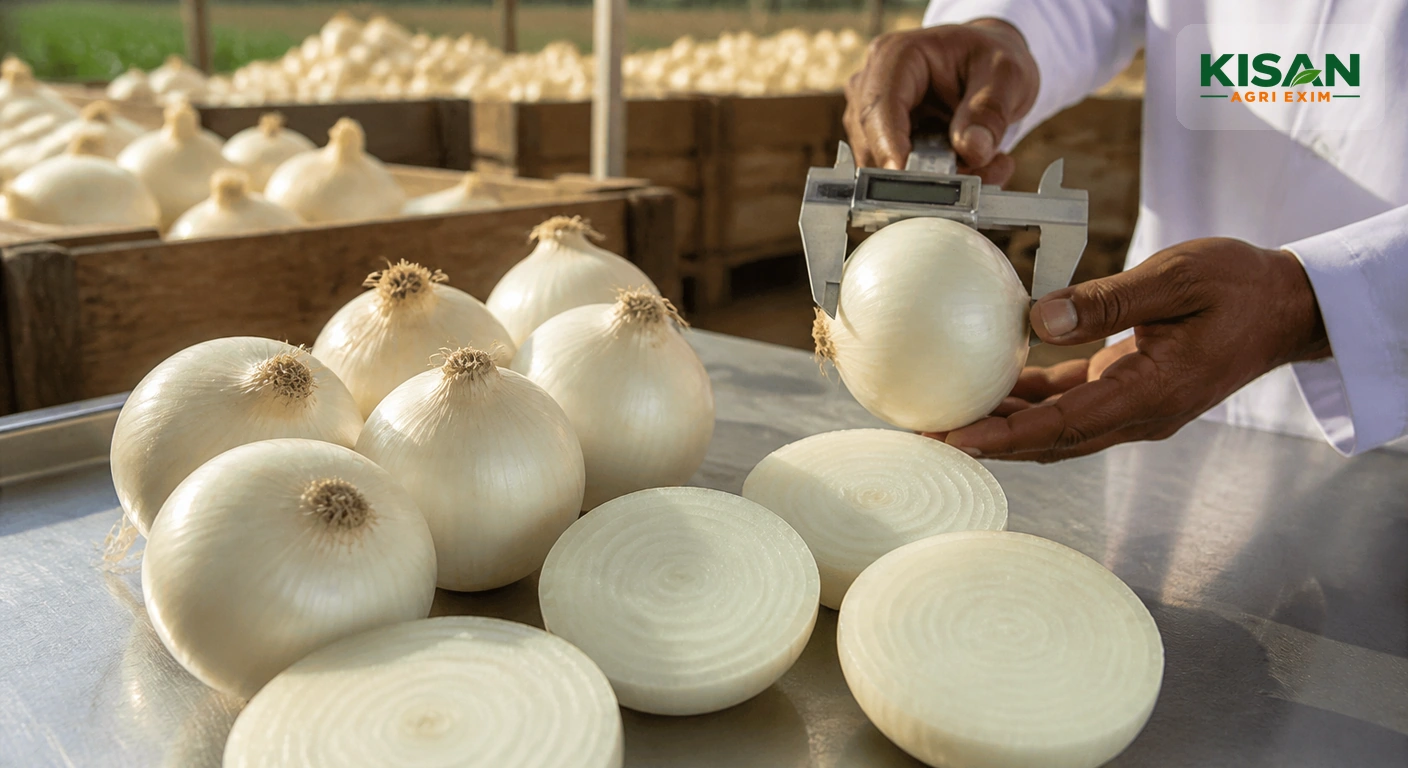
Unlike fresh onion trading, dehydration depends on the bulb’s suitability for processing. White onions with higher dry matter are a preferred feedstock because less water must be removed to make a finished dried product. This makes proximity to suitable crops commercially important: fresh bulbs are bulky and vulnerable to deterioration in transit, while processors need a consistent flow of appropriate raw material.
For buyers, the industry map is useful context, but location alone does not establish whether a product meets a specification. Cut form, moisture, colour, microbiological requirements and packaging all affect suitability for an application. Procurement and quality teams should assess these characteristics against the intended use and destination-market requirements.
Processing Clusters and Plant Types
Mahuva, in the Bhavnagar district, is at the centre of Gujarat’s onion dehydration cluster. Processing activity also extends into nearby Saurashtra districts, including Amreli, Rajkot and Junagadh. The concentration brings processors close to growing areas specializing in white onions used for dehydration.
This regional specialization differs from the fresh onion trade, where red onions grown in other parts of India, including Maharashtra, are prominent. Red onions can also be dehydrated for particular flavour profiles, but white onions are the main industrial feedstock because their higher solid-to-water ratio suits moisture removal.
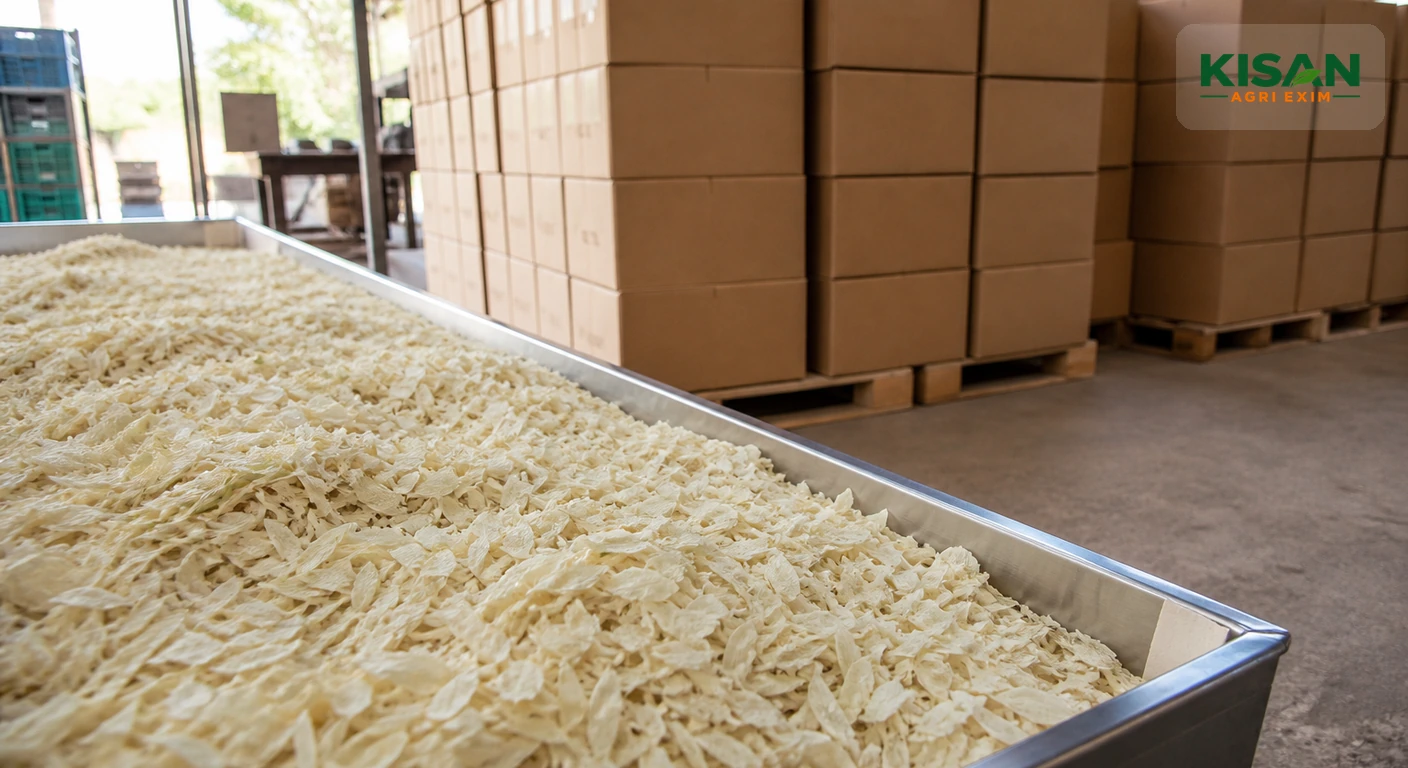
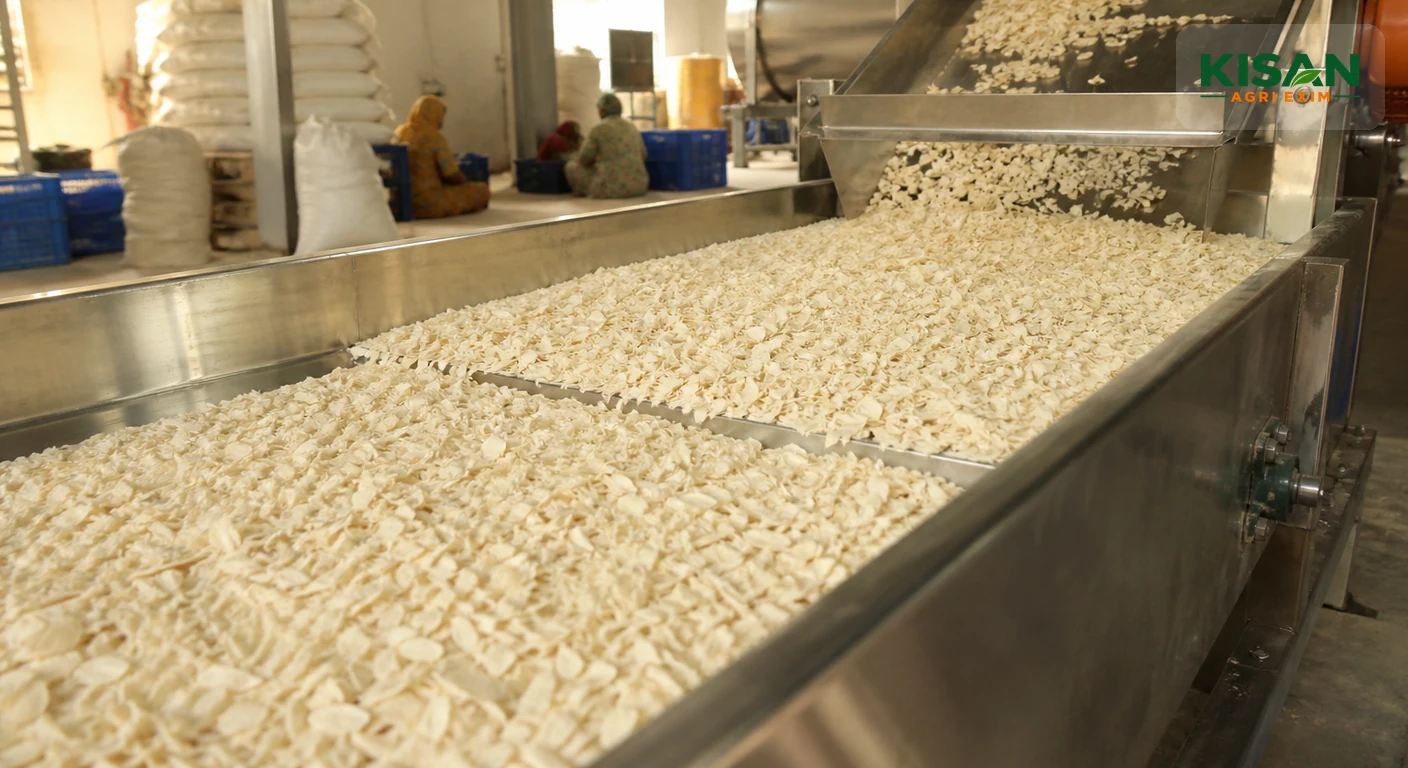
Plants vary by the stages they carry out on site. A processing line may clean, top and slice bulbs before controlled hot-air drying. Facilities with downstream milling and classification can also turn dried material into smaller cuts, granules and powders. These product forms serve different needs:
- Flakes and kibbled onion retain larger pieces for rehydration and food-service use.
- Minced or chopped onion provides visible particles in prepared foods, sauces and seasoning blends.
- Granules and powder blend more uniformly into seasonings, snack products and other manufactured foods.
Some plants focus mainly on drying, while others integrate more of the milling, grading and packing stages. The distinction matters to buyers because the available product range and the controls applied to each stage can differ. Quality and food-safety controls, such as sorting, metal detection and certified management systems, vary from facility to facility, so buyers should confirm which controls and certifications apply to the plant and product being evaluated.
Domestic Demand, Exports and Trade Routes
India’s dehydration sector developed with a strong export orientation, and international buyers remain important customers for dried white onion products. Domestic use has also grown alongside food processing, commercial spice blending, ready-to-eat foods and quick-service restaurants. For these users, dehydrated onion reduces dependence on peeling labour and the handling challenges associated with fresh bulbs.
Export demand spans North America, Europe, Asia-Pacific and markets in the Middle East and Africa. Buyers use dried onion in industrial seasoning, soups, convenience foods and institutional food preparation. Requirements vary by market and application: European buyers, for example, may set demanding specifications for residues, colour and microbiological quality. A product that suits one formulation or destination is not automatically suitable for another.
Shipments from the Gujarat cluster commonly use western maritime routes, including ports such as Pipavav and Mundra. Moisture-barrier bulk packaging helps protect dried products during storage and transit, but the appropriate packaging format depends on the buyer’s logistics and handling requirements.
Fresh onions and dehydrated onion products are distinct trade categories. Export conditions can differ by product and tariff classification, so a policy statement about fresh bulbs should not be assumed to apply to processed onion. Exporters and buyers need to confirm the rules for the specific product and applicable classification before shipment.
Conclusion
India’s dehydrated onion industry is shaped by Gujarat’s white-onion processing cluster, plants with different levels of drying and finishing capability, and demand from both domestic manufacturers and overseas markets. Procurement managers, QA leads and supply chain directors should evaluate product form, process controls, specification fit and destination requirements together rather than treating origin as a complete measure of suitability.
Next Step
See specifications and cut forms in our dehydrated onion range or dehydrated garlic range, or talk to our export sales desk to get tailored product specifications and custom bulk pricing for your market.
FAQs
Where is India’s dehydrated onion industry concentrated?
The main processing cluster is in Gujarat’s Saurashtra region, centred around Mahuva, with activity in nearby districts. The area’s processing base is closely linked to local cultivation of white onions suited to dehydration.
What forms of dehydrated onion do Indian processors produce?
Common forms include flakes, kibbled onion, minced or chopped onion, granules and powder. The choice depends on whether the end product needs visible pieces, rehydratable cuts or ingredients that disperse evenly.
Which markets buy dehydrated onion from India?
Indian dehydrated onion is sold in domestic markets and exported to destinations across North America, Europe, Asia-Pacific, the Middle East and Africa. Specifications vary by buyer, application and destination market.
Ready to source?
Looking for a reliable export partner?
Our export team responds within 24 hours to help you with your bulk sourcing and custom quotation requirements.