

Garlic Price Volatility in Export Buying
Key Takeaway
Garlic mandi prices do not translate directly into dehydrated garlic export quotes. Crop quality, usable yield, processing costs, inventory timing, product form and contract terms all shape the price buyers receive.
Why garlic volatility matters to export buyers
Garlic price volatility affects dehydrated garlic export pricing, but a change in fresh-bulb mandi prices does not automatically produce an equivalent change in an export quote. Dehydrated garlic pricing also reflects raw-material quality and usable yield, processing and packaging, inventory timing, product form and the contract’s delivery and quality terms.
For buyers, this distinction matters when preparing annual budgets, comparing supplier quotations or timing purchases around a harvest. A fresh-garlic market movement is useful context, but it is not a like-for-like benchmark for flakes, granules or powder.
Supply conditions also depend on more than the crop estimate. Production describes the harvest, while marketable stocks and daily arrivals describe different parts of the supply picture. Storage losses can reduce the quantity and quality of bulbs available later, and arrivals fluctuate with farmers’ dispatch decisions, liquidity and transport logistics. A quiet market yard does not, on its own, establish that total stocks are low.
What moves dehydrated garlic export prices
Several linked factors shape the price of export-grade dehydrated garlic:
- Crop size and quality: Weather affects both how much garlic is harvested and how good it is. Heavy rain, for example, can reduce the quality as well as the supply of fresh garlic. A larger harvest does not necessarily mean that more export-suitable raw material is available.
- Stocks and storage condition: Stored bulbs can lose weight and quality through moisture loss, sprouting and decay. Gross inventory therefore does not equal usable processing supply.
- Arrivals and selling decisions: Mandi arrivals reflect the timing of dispatches, local market conditions and transport, not a complete record of stock held across the supply chain.
- Demand and trade conditions: Buyer demand, competing origins, freight and destination tariffs can shift sourcing preferences. Fresh garlic and dehydrated garlic are distinct product categories; trade measures for fresh bulbs do not automatically apply to dehydrated forms. Applicable rules must be verified against official, product-specific notifications and destination requirements before a contract is concluded.
- Product form and contract scope: Flakes, granules and powder require different processing and are sold against distinct specifications. Delivery terms, inspection requirements and payment arrangements also affect the commercial offer.
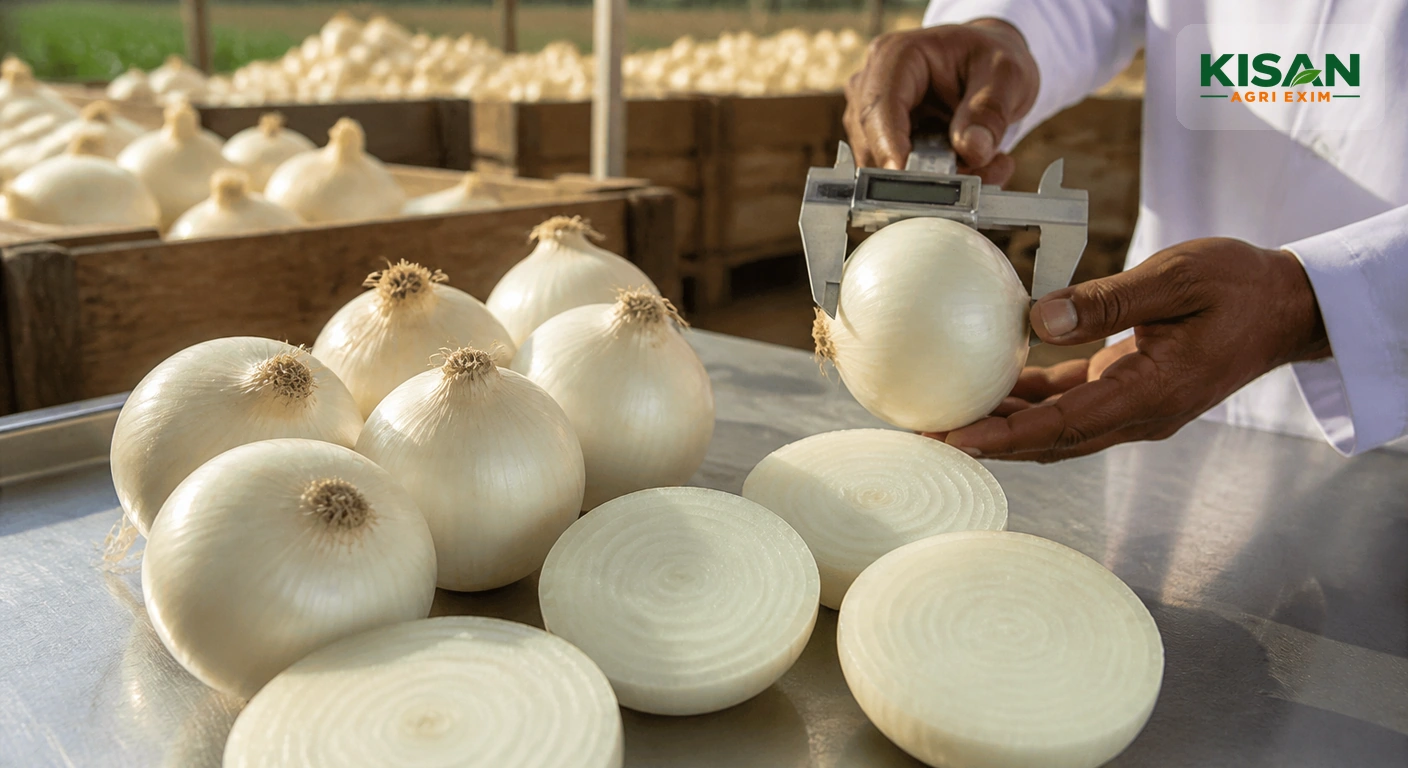
Mandi prices apply to fresh bulbs with variable moisture and quality. Dehydration removes moisture, while sorting, root and stem removal, peeling and other preparation reduce the usable input. The resulting recovery depends on the raw material and the finished-product specification. Bulbs with decay, discolouration or high water content can increase rejects and drying demands, so a lower fresh-bulb price may not reduce the cost of producing export-grade garlic.
Why mandi movements do not map directly to export quotes
Export quotes reflect the cost of producing and supplying a defined processed product, not simply the latest local price for fresh bulbs. The connection between those prices is affected by several commercial mechanics.
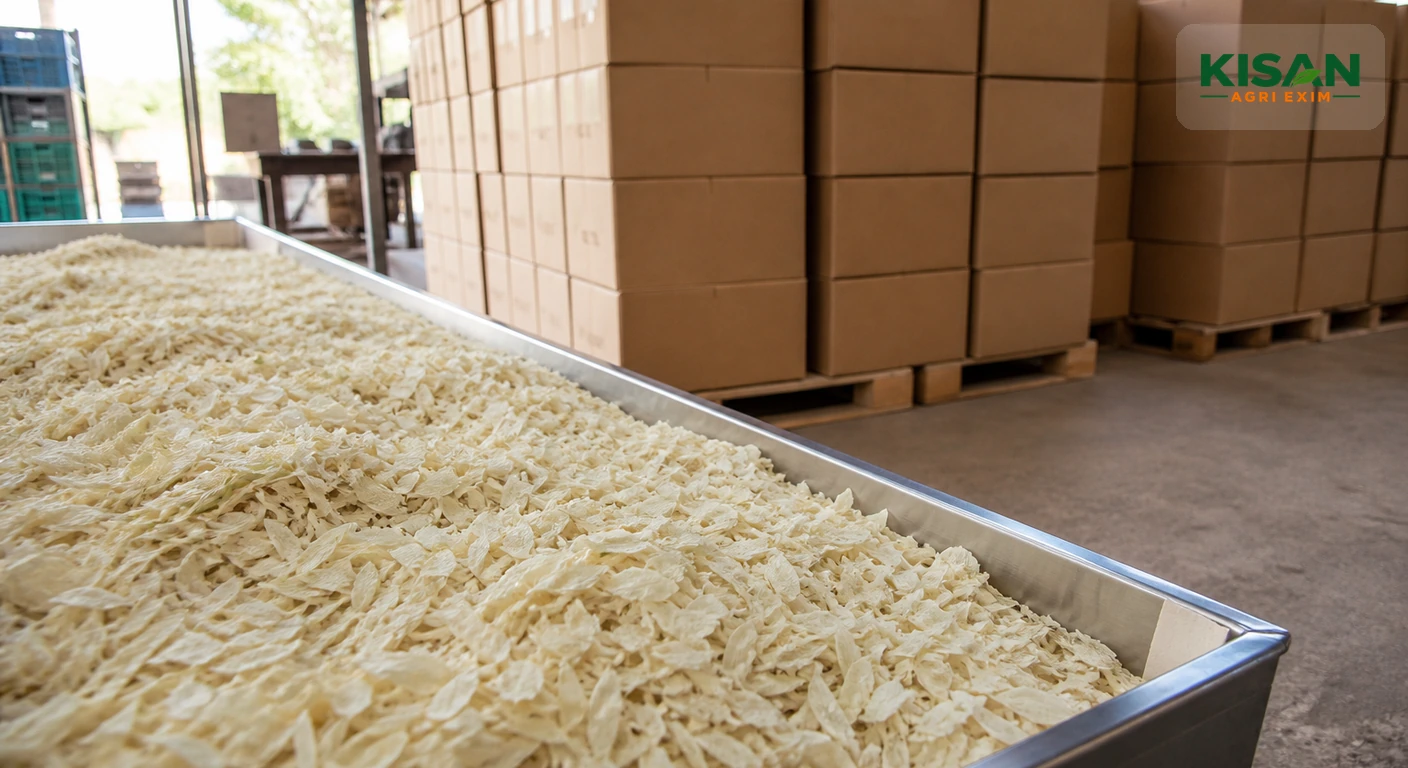
Inventory timing separates today’s market from today’s offer. Dehydrated garlic is processed in seasonal runs and sold from stock, so the export market can be supplied from product made in an earlier season. Industry market reports have described seasons in which fresh garlic was so expensive that little was dehydrated in India, and the market relied on the previous season’s stock. How much carryover stock remains, and whether it still meets export specifications, can therefore weigh on offers alongside current mandi conditions.
Processing adds costs that do not move in step with bulb prices. Sorting, drying, milling, testing and export packaging all contribute to the finished-product cost. A change in raw-material prices is only one input; the finished price also depends on process efficiency, quality requirements and the product being supplied.
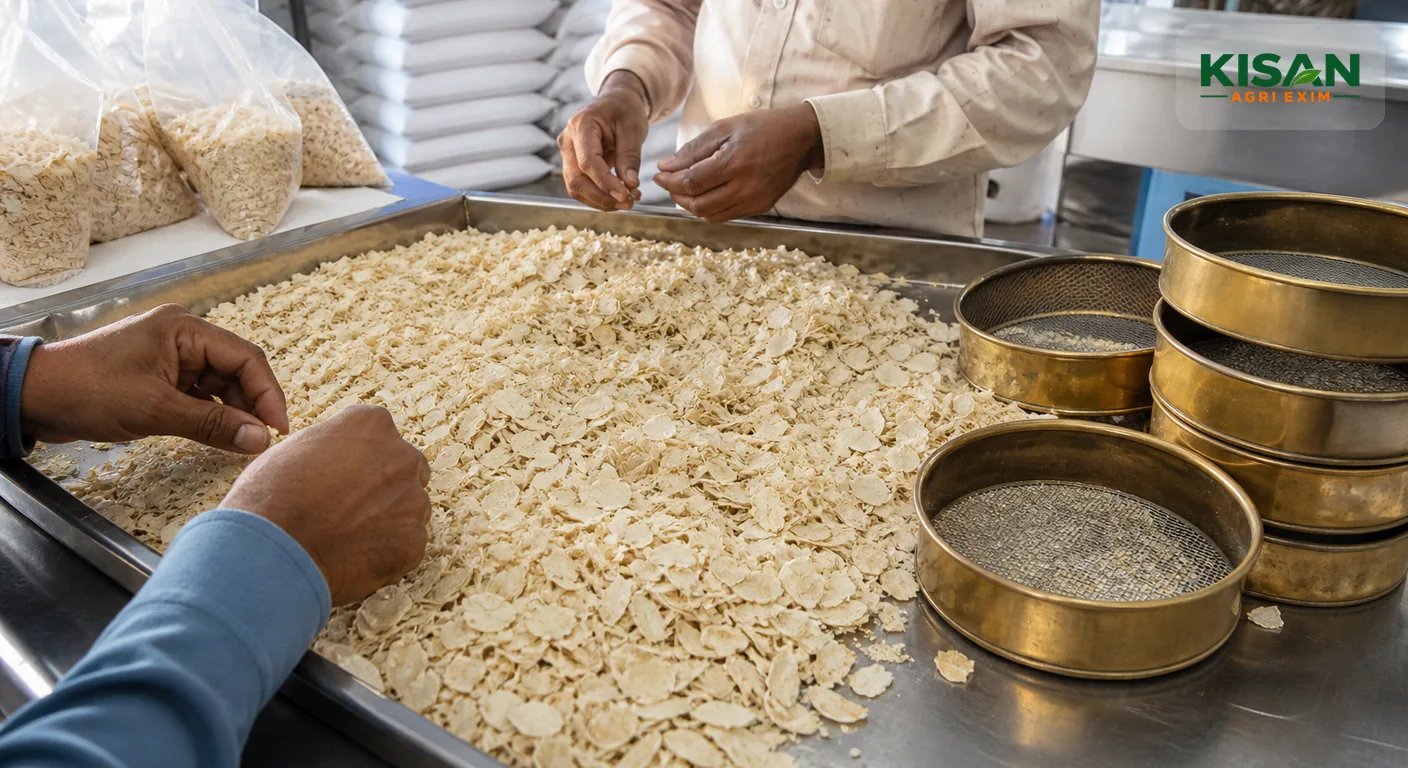
The specification defines what is being priced. A quote for one cut or particle size cannot be compared directly with a different form or quality grade. Buyers should align moisture limits, particle-size distribution, colour expectations and defect tolerances before comparing offers. Consistent specifications make price comparisons more meaningful and help reduce quality disputes across procurement cycles.
Contract terms shape the landed commercial offer. Incoterms, inspection arrangements, shipment timing, payment terms and destination requirements define the seller’s obligations and the buyer’s exposure. A low headline price may not represent equivalent scope if the offers differ on these terms.
Managing procurement risk
Buyers can manage volatility through purchasing and contract design without assuming that any approach will guarantee a lower price.
- Keep specifications consistent across quotations. Set the required product form and quality limits before soliciting offers. This helps distinguish a genuine price difference from a difference in specification.
- Stagger purchases where supply plans allow. Distributing procurement across buying windows can reduce reliance on a single market moment. The trade-off is greater coordination and possible storage costs.
- Use clear quote-validity periods. A quotation should state how long its price and availability remain binding. This limits disputes when input costs or supply conditions change before an order is confirmed.
- Define price-adjustment terms in long-term contracts. If a contract allows adjustments, specify the agreed benchmark or verifiable input-cost basis, review method, timing and documentation. Clear rules allocate volatility more transparently than an undefined right to revise prices.
- Verify policy and destination requirements for the exact product. Confirm the applicable tariff, export rule and sanitary requirements for the dehydrated form and destination using current official sources before committing.
Conclusion
For procurement managers, QA leads and supply chain directors, fresh-garlic mandi prices are context—not a direct export-price formula. Compare dehydrated garlic offers against consistent specifications, inventory timing and contract scope, then use staged purchasing, defined quote validity and transparent adjustment clauses to manage exposure.
Next Step
See specifications and cut forms in our dehydrated onion range or dehydrated garlic range, or talk to our export sales desk to get tailored product specifications and custom bulk pricing for your market.
FAQs
Why can dehydrated garlic prices rise when mandi prices fall?
Export prices also depend on how much finished stock from earlier processing remains and whether it meets export specifications, as well as on usable yield and processing costs. Fresh-bulb prices and finished dehydrated-garlic prices apply to different products and cost structures.
Do low mandi arrivals mean garlic stocks are low?
No. Arrivals show what is being brought to market, not all stock held across the supply chain. Dispatch timing, transport and seller decisions can change arrivals even when inventory remains elsewhere.
How can buyers manage garlic price volatility in export contracts?
Buyers can use consistent specifications, staggered procurement, explicit quote-validity periods and transparent price-adjustment clauses. These measures clarify exposure and timing; they do not guarantee a particular price outcome.
Ready to source?
Looking for a reliable export partner?
Our export team responds within 24 hours to help you with your bulk sourcing and custom quotation requirements.