

India’s Garlic Import Policy
Key Takeaway
India’s Customs Tariff sets a 100% standard rate on fresh garlic (0703 20 00) and 30% on dehydrated garlic powder, flakes and dried garlic (0712 90 20 to 0712 90 40), as listed on 1 October 2026. These are tariff rates, not the final duty: exemptions, taxes and the applicable import policy decide what a shipment actually pays.
How garlic import policy affects dehydrated garlic
India’s garlic import policy affects dehydrated garlic indirectly through the rules governing imported raw bulbs, tariff classification, and any applicable export-linked duty relief. The policy position must be checked for the specific product form against current official notifications; rules for fresh bulbs do not automatically apply to dried garlic, flakes or powder.
For food manufacturers and ingredient buyers, the commercial link is raw-material access. Imported bulbs can provide an alternative to domestic sourcing where an applicable route permits them, while policy conditions and compliance requirements influence whether that alternative is operationally workable. The result can affect processor sourcing choices and the availability of garlic ingredients, but it does not establish a predictable or automatic change in finished-product prices.
Procurement teams should distinguish between raw garlic bulbs and processed dehydrated garlic at every stage of a purchase review. The tariff line, product description and processing status determine which import conditions need to be assessed. Product classification also matters when garlic is roasted, blended with salt or mixed with other seasonings, because a prepared product may fall under a different category from plain dried garlic.
Current tariff rates by garlic form
India’s Customs Tariff gives each garlic form its own tariff line. As listed on 1 October 2026, the rates are:
| Product form | Tariff item | Standard rate | Preferential rate |
|---|---|---|---|
| Fresh or chilled garlic | 0703 20 00 | 100% | 90% |
| Dehydrated garlic powder | 0712 90 20 | 30% | 20% |
| Dehydrated garlic flakes | 0712 90 30 | 30% | 20% |
| Dried garlic | 0712 90 40 | 30% | 20% |
Source: First Schedule to the Customs Tariff Act, 1975, Chapter 7, rates as listed on 1 October 2026 (Customs Tariff Act, India Code).
These are tariff rates, not the duty a shipment finally pays. An exemption notification under section 25 of the Customs Act, 1962 can replace the tariff rate for particular goods, and integrated tax and any anti-dumping or safeguard duty are charged on top. The preferential rate applies only to goods that qualify for preferential treatment. Confirm the rate for a specific shipment with Indian customs (CBIC) or a customs broker before costing a purchase.
The same four tariff lines appear in DGFT’s import policy schedule, which lists them among the food items shared with customs for FSSAI clearance and classes each as low risk (ITC (HS) 2022, Schedule 1, Appendix V). The same appendix lists the ports and airports through which imported food items may enter India.
That appendix does not say whether importing each garlic form is free, restricted or subject to a product-specific condition, and we could not confirm that status from DGFT’s published import policy. Check the current entry for these codes in DGFT’s ITC (HS) Schedule 1 import policy before contracting.
Import rules, duties and product classification
India’s import framework is set through product-specific policy conditions and notifications. Importers need to establish the correct classification and confirm the applicable policy status for the goods being purchased. A general reference to “garlic imports” is not enough: fresh bulbs, dried forms and prepared seasonings are distinct products for classification and compliance purposes.
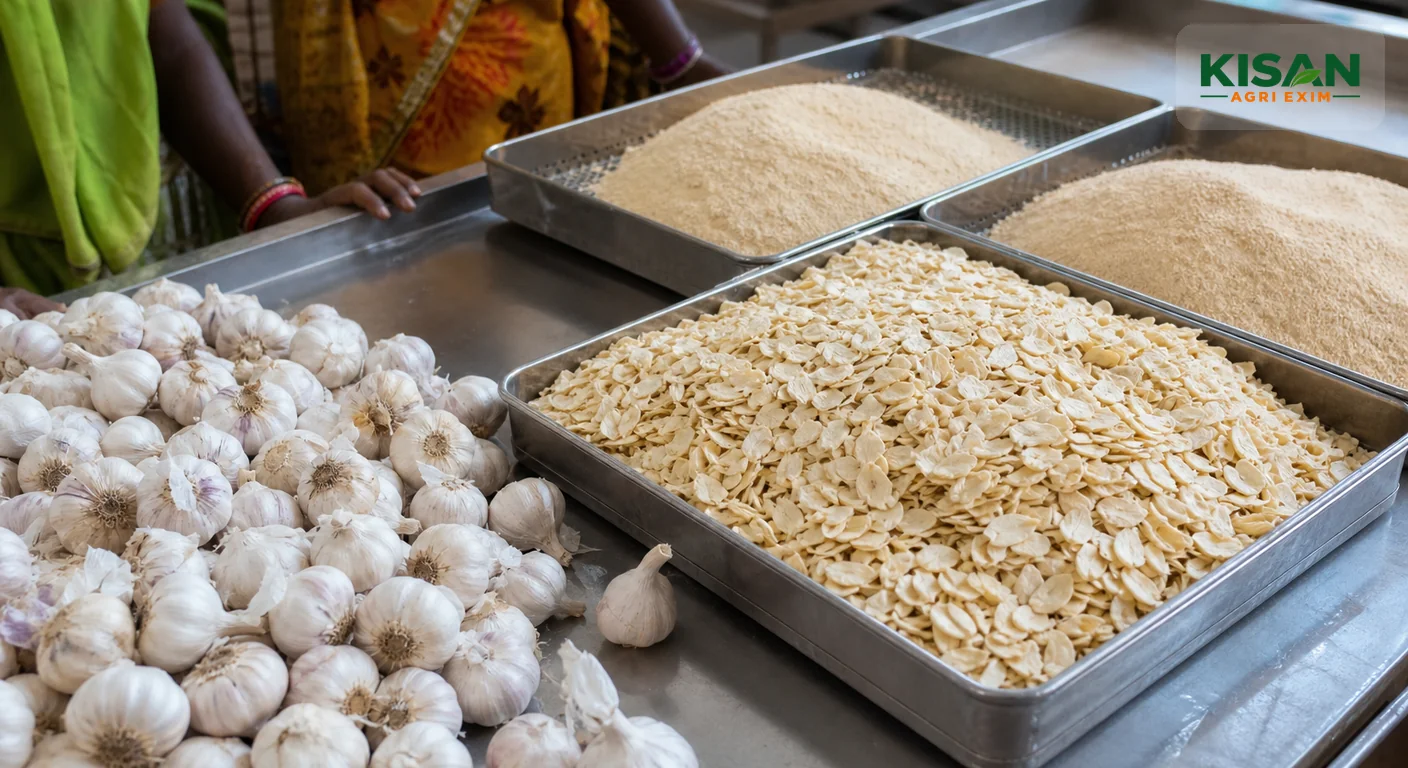
Dehydrated garlic is traded in forms such as flakes, granules and powder. Classification should match the product’s actual form and processing. Roasting or combining garlic with culinary salts and other ingredients can move a product into a prepared-seasoning category, changing the applicable tariff and border requirements. A mismatch between the commercial description and declared classification can create avoidable clearance and compliance risk.
Duty-exemption mechanisms may also be relevant to export-oriented processing. Under such a route, imported raw material is linked to export obligations, with accountability for converting the imported input into eligible finished goods. Historical administrative provisions show that input-output accounting can involve recovery norms that distinguish dried forms by moisture category. Those precedents are not proof that a particular scheme or norm remains available today: eligibility, current norms and documentation must be verified against the applicable official notification before a transaction is committed.
Domestic sourcing, quality and policy watch points
Import access can change the range of sourcing options available to processors, but its effect on the domestic garlic market depends on the conditions of entry and the way supply is used. If imported bulbs become a viable alternative, processors may have more flexibility when comparing domestic and imported raw material. If entry is restricted, conditional or administratively demanding, domestic sourcing may remain the practical route. Neither outcome guarantees a particular movement in domestic prices; policy, sourcing decisions and market conditions interact.
The decision also has operational consequences. Importing raw bulbs for export-linked processing requires traceability from input to finished product, reliable storage and documented export fulfilment. Processors must account for material transformation during dehydration, where moisture removal changes the weight and form of the product. This makes yield accountability important both for regulatory compliance and for evaluating whether an import route works within a processor’s production system.
Quality controls remain central regardless of origin. Moisture management supports shelf stability and helps limit microbial risk in dried garlic. Powder also needs protection against caking and loss of pungency, while flakes require careful handling to preserve physical integrity and limit discolouration during storage and transit. Packaging, warehousing and process controls should therefore be assessed against the product form and the buyer’s quality specification, not treated as interchangeable across all dehydrated garlic grades.
For businesses considering imported fresh bulbs, plant-health and quarantine requirements are a separate point of verification from tariff classification and import policy. The relevant conditions may depend on the product and entry route. Confirm current requirements with the responsible plant-quarantine authorities before contracting, rather than assuming that tariff clearance alone covers biosecurity approval.
Conclusion
India’s garlic import policy can influence dehydrated garlic supply through raw-material access, classification, duty treatment and export-accountability requirements, but no single rule applies to every garlic product form. Procurement managers, QA leads and supply chain directors should verify the current product-specific notification, confirm the correct classification and assess traceability and quality controls before relying on an import route.
Next Step
See specifications and cut forms in our dehydrated onion range or dehydrated garlic range, or talk to our export sales desk to get tailored product specifications and custom bulk pricing for your market.
FAQs
Does India’s garlic import policy apply equally to fresh and dehydrated garlic?
No. Fresh garlic (0703 20 00) carries a 100% standard tariff rate, while dehydrated garlic powder, flakes and dried garlic (0712 90 20 to 0712 90 40) carry 30%, as listed on 1 October 2026. Prepared seasonings can fall under other lines again. Importers should verify the current policy and duty for the exact product form.
Can imported garlic bulbs be used for export-oriented processing?
An applicable duty-exemption route may allow imported raw material to be linked to export commitments, subject to current eligibility, input-output requirements and accountability rules. Historical provisions should not be treated as confirmation of current terms.
How can garlic imports affect India’s dehydrated garlic market?
Imports may offer processors an alternative raw-material source, while restrictions or compliance burdens can limit its practical use. Any effect on domestic sourcing or prices depends on market conditions and the applicable import terms; it is not automatic.
Ready to source?
Looking for a reliable export partner?
Our export team responds within 24 hours to help you with your bulk sourcing and custom quotation requirements.