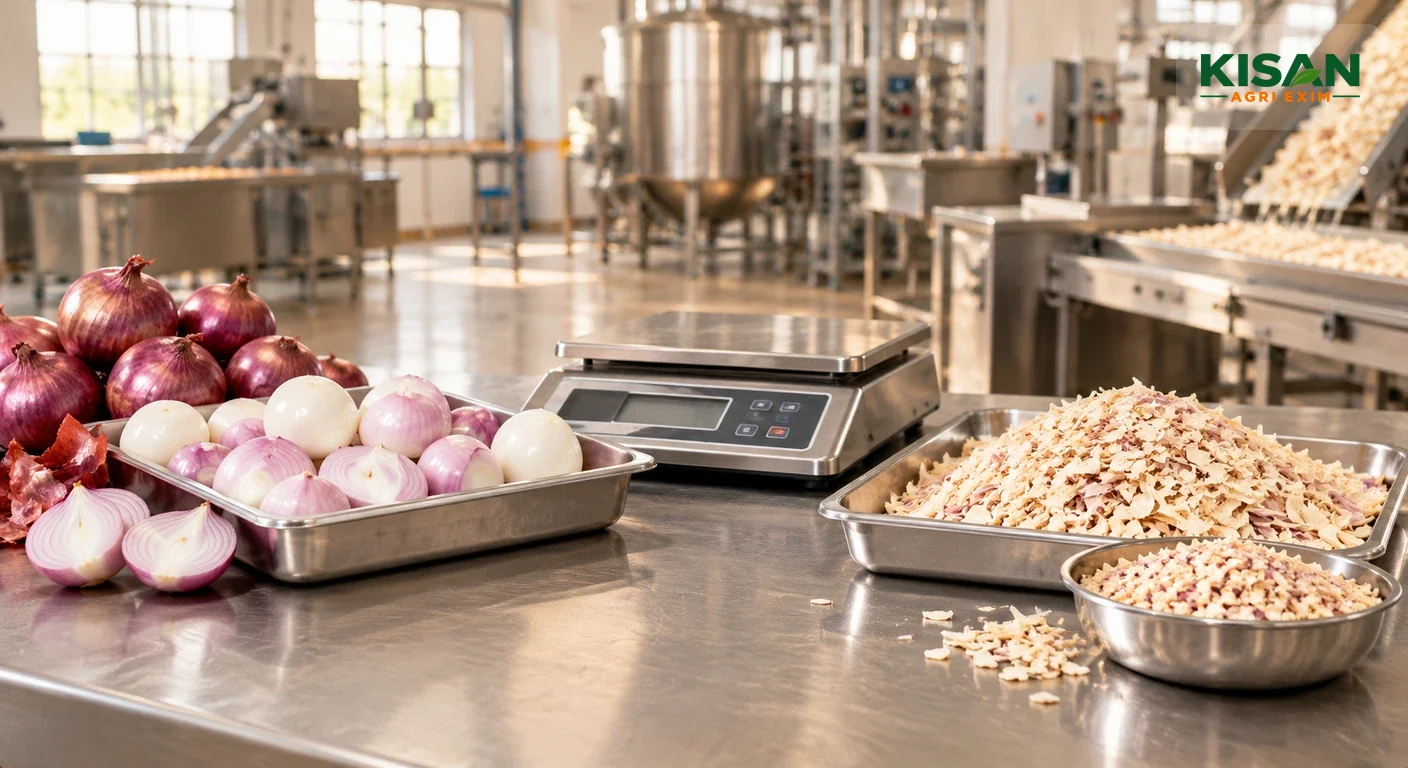


Dehydrated Onion & Garlic Shelf Life
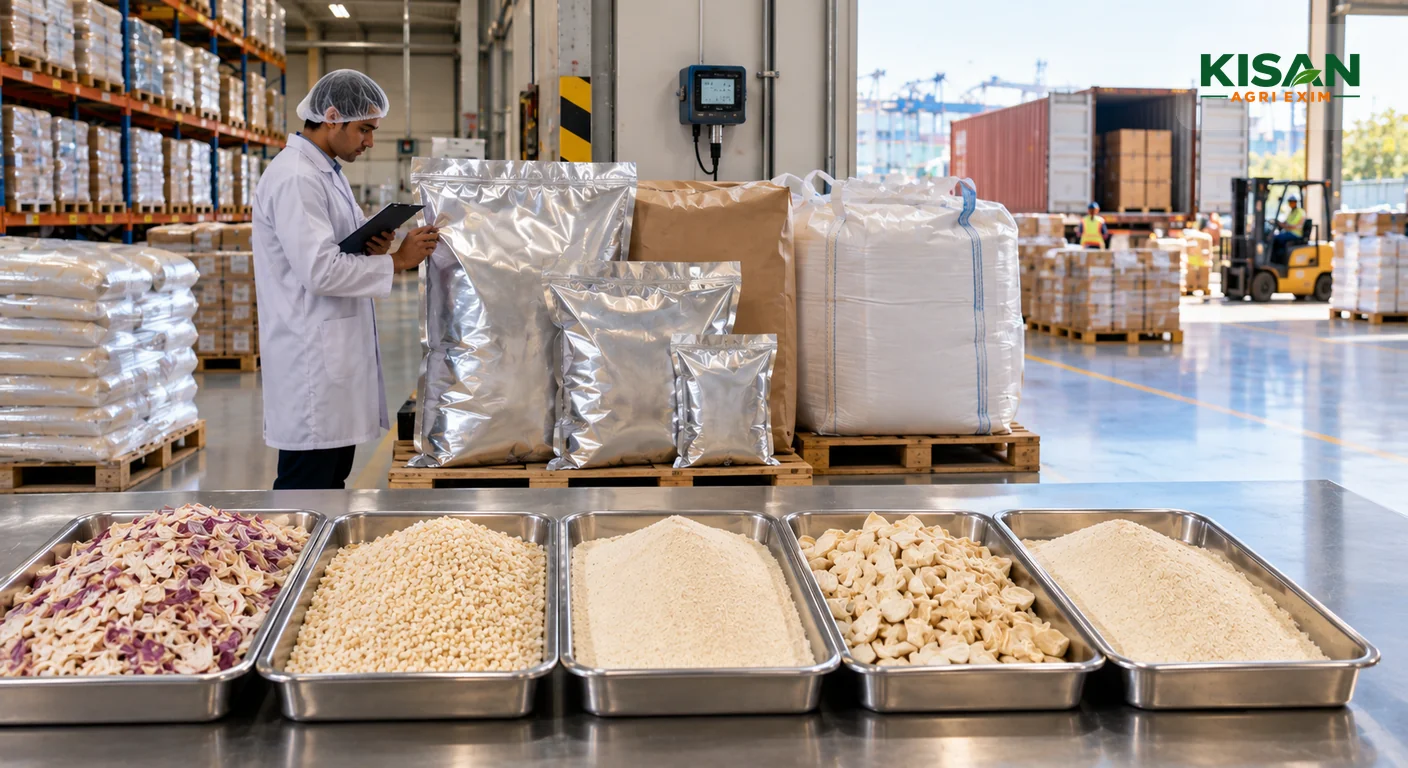
Key Takeaway
Dehydrated onion and garlic can typically maintain quality for around 12–24 months when produced to specification and stored in suitable moisture-barrier packaging under cool, dry conditions. Moisture pickup, high humidity, heat, oxygen exposure and poor packaging can shorten practical shelf life.
How Long Do Dehydrated Onion and Garlic Last?
Dehydrated onion and garlic can typically maintain their intended quality for around 12–24 months when properly processed, packed and stored under suitable conditions. The actual shelf life depends on moisture level, packaging performance, temperature, relative humidity, oxygen exposure, storage conditions and the product specification.
Dehydration removes most of the water from onion and garlic, reducing the conditions that support microbial growth. However, the finished product can absorb moisture from the surrounding environment if packaging is inadequate or remains open for extended periods.
For commercial buyers, shelf life should therefore be considered as a combination of product quality + packaging protection + storage conditions, rather than simply a date printed on the bag.
What Factors Affect Dehydrated Onion and Garlic Shelf Life?
Several conditions can influence how long dehydrated onion and garlic retain their expected quality.
| Factor | Recommended Control | Effect on Shelf Life |
|---|---|---|
| Moisture | Onion typically ≤ 6%; garlic typically ≤ 6–8%; powder may require ≤ 5.0% | Higher moisture can reduce stability and increase caking risk |
| Packaging | Moisture-resistant, properly sealed packaging | Limits moisture and oxygen exposure |
| Temperature | Cool, stable storage conditions | Excessive heat can accelerate quality deterioration |
| Relative Humidity | Keep warehouse conditions dry | High humidity increases moisture pickup |
| Light Exposure | Store away from prolonged direct light | Helps protect color and sensory quality |
| Oxygen Exposure | Minimize unnecessary exposure | Helps preserve color, aroma and overall quality |
| Handling | Keep bags sealed and undamaged | Prevents moisture and contamination from entering |
The exact limits should always follow the supplier’s product specification and the buyer’s agreed storage requirements.
Why Moisture Is the Main Shelf-Life Concern
Moisture is one of the most important factors affecting dehydrated ingredients after processing.
A dehydrated onion or garlic product can leave the processing facility at an acceptable moisture level but later absorb moisture if exposed to humid air. This is particularly important when bags are opened in warehouses, production facilities or blending rooms.
Moisture pickup can lead to:
- Caking
- Loss of free-flowing characteristics
- Changes in texture
- Faster quality deterioration
- Increased risk of microbial growth when moisture becomes sufficiently high
- Changes in aroma and appearance
For powders and fine granules, moisture control is especially important because their greater surface area can make them more sensitive to environmental exposure.
How Packaging Protects Shelf Life
Packaging acts as the main barrier between a dehydrated ingredient and the surrounding environment.
For bulk commercial supply, packaging should protect the product from moisture, contamination, physical damage and unnecessary exposure to air during storage and transportation.
A typical bulk configuration may include:
- Strong outer bag or sack
- Food-grade inner liner
- Moisture-resistant barrier
- Secure heat sealing or closure
- Appropriate palletization
- Protection against puncture and handling damage
The appropriate packaging structure depends on the product, shipment duration, destination climate and buyer requirements.
A package that performs adequately in a dry warehouse may require additional moisture protection when the product is shipped to a hot or highly humid environment.
Recommended Packaging for Different Climates
Climate should be considered when selecting packaging and storage procedures.
| Climate / Environment | Main Risk | Packaging & Storage Consideration |
|---|---|---|
| Dry / Low Humidity | Lower moisture exposure | Standard moisture-resistant food-grade bulk packaging may be suitable |
| Warm & Humid | Moisture absorption and caking | Use strong moisture-barrier inner liners and maintain secure sealing |
| Tropical / High Humidity | Rapid moisture pickup after opening | Higher-barrier packaging, careful warehouse humidity control and minimized exposure |
| Long-Distance Sea Freight | Heat, humidity and condensation | Use suitable moisture protection, secure palletization and appropriate container loading practices |
| Cold-to-Warm Transitions | Condensation risk | Avoid unnecessary exposure to humid air during unloading and storage |
The final packaging specification should be established based on the product, destination, transport route and expected storage conditions rather than climate classification alone.
Best Warehouse Conditions for Dehydrated Onion and Garlic
A suitable warehouse should be clean, dry, well maintained and protected from direct environmental exposure.
Bulk dehydrated onion and garlic should be:
- Stored away from water sources
- Kept off the floor on suitable pallets
- Protected from direct sunlight
- Kept away from strong-smelling materials
- Stored in sealed original packaging until required for production
- Protected from damaged or punctured bags
- Managed using appropriate stock rotation
- Kept in an environment with controlled humidity where practical
The storage area should also be inspected regularly for water leakage, condensation, pest activity and damaged packaging.
The objective is simple: the product should remain as dry after packing as it was when it entered storage.
How to Protect Dehydrated Ingredients During Transport
Transport can expose dehydrated onion and garlic to conditions that differ significantly from the warehouse.
Long-distance shipments may experience changes in temperature, humidity and handling conditions. Sea freight can be particularly sensitive to environmental conditions inside the container.
Before dispatch, buyers and suppliers should consider:
- Packaging integrity
- Pallet stability
- Container cleanliness
- Protection from water ingress
- Proper separation from incompatible materials
- Shipment duration
- Destination climate
- Seasonal temperature and humidity
- Appropriate container loading practices
The product should remain inside intact sealed packaging throughout transportation whenever possible.
What Happens When Dehydrated Onion or Garlic Absorbs Moisture?
Moisture absorption does not always produce an immediate visible problem.
Early deterioration may appear as a gradual loss of free-flowing texture. Powders can begin forming small lumps, while granules and smaller particles may start sticking together.
With continued moisture exposure, buyers may observe:
Caking
Powder and fine particles can form lumps when moisture is absorbed from the environment.
Color Changes
Prolonged exposure to unsuitable temperature, moisture or storage conditions can affect the appearance of dehydrated ingredients.
Off-Odor
Changes in aroma can indicate deterioration or exposure to unsuitable storage conditions. Dehydrated onion and garlic should retain their characteristic product aroma without unusual odors.
Texture Changes
Flakes, granules and other cut forms can lose their intended dry and free-flowing characteristics.
Packaging Damage
Torn, punctured or poorly sealed bags can allow moisture and contaminants to enter the product.
Any significant change should be investigated against the product specification and applicable quality-control procedures rather than judged only by appearance.
How to Store Dehydrated Onion and Garlic After Opening
Shelf life after opening can be considerably different from the original unopened shelf-life specification.
Once a bulk bag is opened, the product is exposed to warehouse air. In humid conditions, moisture absorption can occur much faster than in sealed packaging.
After opening:
- Remove only the quantity required for production.
- Reseal the remaining product immediately.
- Keep the product in a dry, clean storage area.
- Avoid leaving bags open during production breaks.
- Use clean, dry handling equipment.
- Monitor the product for caking, color or odor changes.
- Follow the manufacturer’s recommended use period after opening where one is specified.
For high-volume manufacturers, using smaller production packs can sometimes reduce repeated exposure of the remaining product to warehouse humidity.
How Buyers Can Monitor Shelf Life
A practical shelf-life control system should combine the manufacturer’s specification with warehouse monitoring.
| Check | What to Monitor | Recommended Action |
|---|---|---|
| Packaging | Tears, punctures, weak seals | Isolate damaged packs |
| Appearance | Color and visible contamination | Compare against approved specification |
| Texture | Caking or loss of free flow | Investigate moisture exposure |
| Aroma | Unusual or off-odor | Hold product for quality review |
| Storage Area | Humidity, leaks and condensation | Correct environmental issue |
| Stock Age | Production / expiry dates | Apply appropriate stock rotation |
| Moisture | Product moisture where testing is required | Compare with specification |
For commercial food production, sensory checks should not replace laboratory testing where the product specification requires analytical verification.
Shelf Life Starts With the Product Specification
Good storage cannot compensate for a product that was not properly dried or packed in the first place.
The processor should establish the required moisture level and other quality parameters before the product is packed. Packaging should then be selected to protect those characteristics throughout storage and transportation.
For buyers, this means shelf-life evaluation should begin before the shipment arrives. The product specification, certificate of analysis, packaging configuration and recommended storage conditions should be reviewed as part of supplier approval.
Conclusion
The shelf life of dehydrated onion and garlic depends on more than the product’s initial moisture level. Proper dehydration, moisture-barrier packaging, dry storage, controlled handling and suitable transportation conditions all contribute to maintaining product quality throughout its intended shelf life.
For importers and food manufacturers, controlling moisture exposure from production through final use is one of the most practical ways to reduce caking, odor, color and texture-related quality problems.
Next Step
Review moisture and packaging specifications in our dehydrated onion range or dehydrated garlic range, or talk to our export sales desk to get tailored packaging recommendations and custom bulk pricing for your destination port.
FAQs
What is the typical shelf life of dehydrated onion and garlic?
A typical commercial shelf-life range can be around 12–24 months under suitable storage conditions, but the actual period depends on the product specification, packaging and manufacturer’s validated shelf-life requirements.
What is the best way to store dehydrated onion and garlic?
Store the product in its sealed original packaging in a clean, dry warehouse away from direct sunlight, water and excessive humidity. Keep bags off the floor and reseal opened packaging promptly.
Can humidity affect dehydrated onion shelf life?
Yes. Dehydrated onion and garlic can absorb moisture from humid air, which may cause caking, texture changes and other quality deterioration. Moisture-barrier packaging and dry storage help reduce this risk.
What are the signs that dehydrated onion or garlic has deteriorated?
Common warning signs include excessive caking, unusual color changes, loss of normal aroma, off-odor, texture changes or damaged packaging. Suspect product should be evaluated against the applicable quality specification.
What packaging is suitable for dehydrated onion and garlic exports?
Export packaging should provide appropriate protection against moisture, contamination and physical damage. The required barrier level depends on the product, shipment duration, destination climate and storage conditions.
Ready to source?
Looking for a reliable export partner?
Our export team responds within 24 hours to help you with your bulk sourcing and custom quotation requirements.