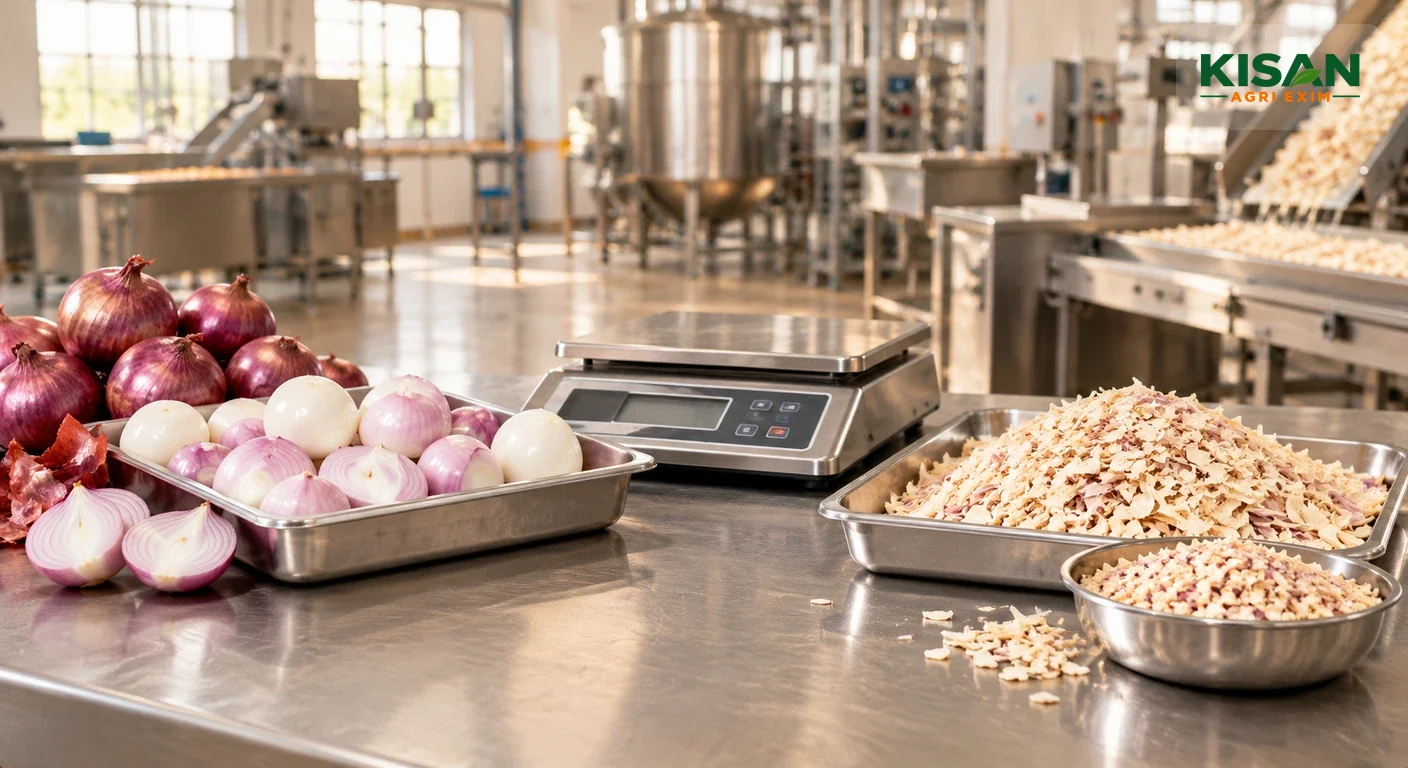


Dehydrated Onion Format Comparison: Flakes vs Minced vs Powder for Food Production Lines
Key Takeaway
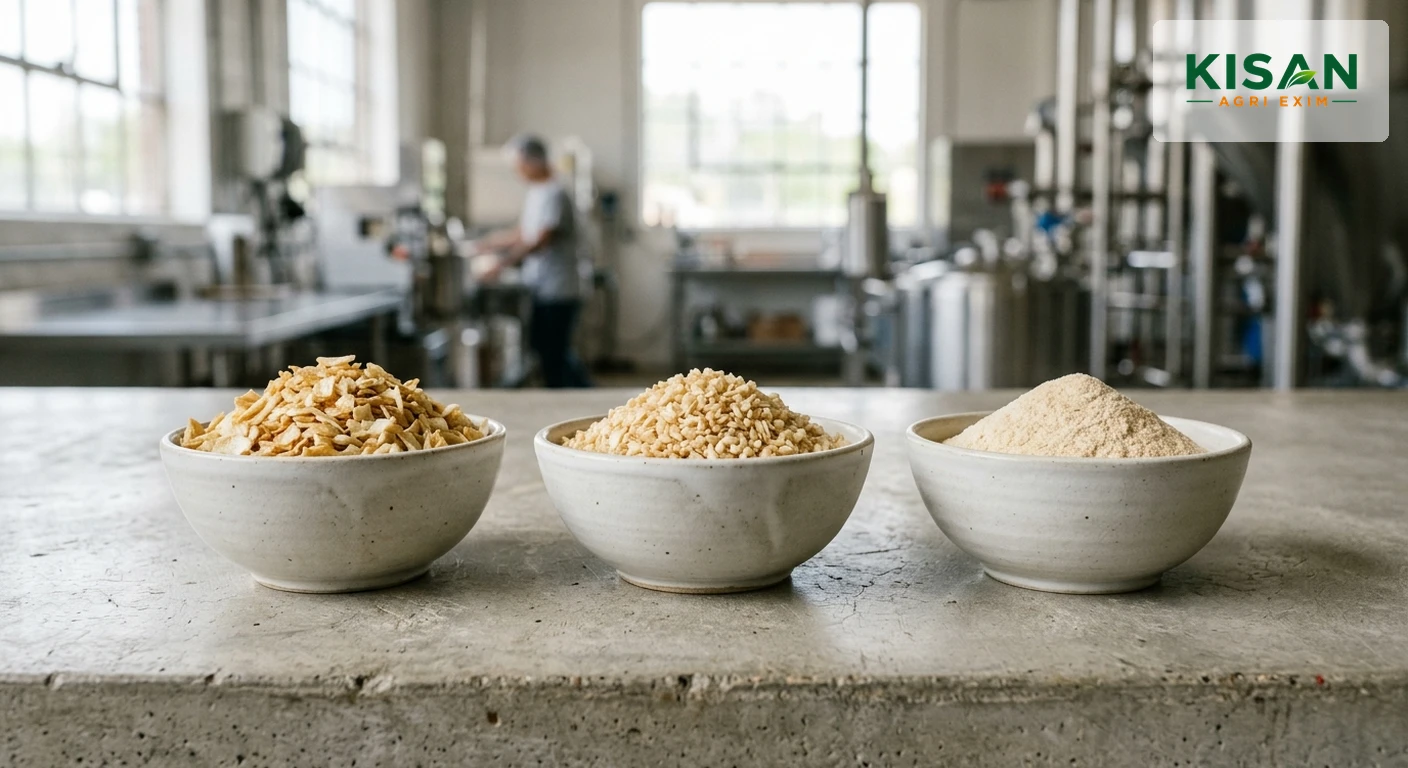
Choose kibbled (3–15 mm) for visible texture in soups and snacks, minced (1–3 mm) for sauces and fillings, and powder (80–120 mesh) for dry blends and instant foods. All formats ship at ≤6% moisture with 12–24 month shelf life.
Format comparison at a glance
| Parameter | Kibbled / Flakes | Minced | Powder |
|---|---|---|---|
| Particle size | 3–15 mm | 1–3 mm | 80–120 mesh |
| Moisture | ≤6% | ≤6% | ≤5% |
| Rehydration ratio | ~1:5 (weight) | ~1:5 | N/A (dissolves) |
| Best applications | Soups, snacks, ready meals, bakery | Sauces, fillings, seasoning blends | Dry mixes, marinades, instant foods |
| Shelf life | 12–24 months | 12–24 months | 12–24 months |
How to pick the right format
Use kibbled / flakes when:
- Your finished product needs visible onion pieces (soups, top-of-pizza, snack seasonings)
- Texture and rehydration during cooking is part of the recipe design
Use minced when:
- You need even onion distribution without large chunks (sauces, marinades, prepared fillings)
- The production line requires consistent particle size for mixing equipment
Use powder when:
- Onion flavor must be invisible — fully blended into a dry mix, batter, or marinade
- Your process demands precise dosing by weight with no particle variation
Supplier evaluation checklist
Before locking in a dehydrated onion supplier, verify these eight items:
- Product spec sheet with current moisture, color, and mesh data
- Microbiological test results (TPC, yeast/mould, coliforms, E. coli, Salmonella)
- Allergen declaration
- Sample approval before bulk order
- FSSAI certification and APEDA registration
- Lead time from order confirmation to dispatch
- Packaging options (standard 25 kg bags, custom retail/private-label)
- Documentation: COA, Certificate of Origin, phytosanitary certificate
Conclusion
Selecting the right dehydrated onion format depends entirely on your end product. Kibbled delivers texture, minced provides even distribution in sauces and fillings, and powder integrates invisibly into dry blends. Regardless of format, insist on verified spec sheets, microbiological testing, and sample approval before committing to a bulk order — this single step eliminates the majority of quality disputes after shipment.
Next Step
See cut forms, moisture limits, and packaging options in our dehydrated onion range or talk to our export sales desk to get tailored technical specifications and a custom bulk quote for your market.
FAQs
What is the difference between onion kibbled and onion flakes?
Kibbled onion and onion flakes refer to the same format, containing larger cut pieces ranging from 3 mm to 15 mm. They are ideal for applications where visible onion pieces and texture are desired, such as in canned soups or pizza toppings.
What mesh size is standard for dehydrated onion powder?
Dehydrated onion powder standard mesh size is between 80 to 120 mesh. This fine consistency ensures the powder dissolves easily in dry mixes, sauces, and instant food formulations.
What is the rehydration ratio of dehydrated onion flakes?
The rehydration ratio for dehydrated onion flakes (kibbled) and minced onion is approximately 1:5 by weight. One part of dehydrated onion absorbs five parts of water to restore its original flavor and texture.
Ready to source?
Looking for a reliable export partner?
Our export team responds within 24 hours to help you with your bulk sourcing and custom quotation requirements.