

Dehydrated Garlic Quality Checklist: 7 Parameters Importers Should Verify Before Ordering

Key Takeaway
Check these 7 parameters before ordering dehydrated garlic: moisture (≤6%), particle size, allicin retention, microbiology (TPC <100K cfu/g), color grade, packaging barrier, and batch traceability. Skipping any of these risks rejection at destination port.
Garlic format specifications
| Parameter | Flakes | Minced | Granules |
|---|---|---|---|
| Particle size | 5–15 mm slices | 1–3 mm pieces | 8–20 mesh / 20–40 mesh |
| Moisture | ≤6% | ≤6% | ≤5.5% |
| Color | Creamy white to light yellow | Creamy white | Off-white to light yellow |
| Shelf life | 12–24 months | 12–24 months | 12–24 months |
| Grade options | Premium A grade, Commercial | Premium A grade, Commercial | Premium A grade, Commercial |
| Best applications | Soups, sauces, bakery, foodservice | Sauces, marinades, fillings | Dry seasoning, snack coatings, blends |
The 7-point quality checklist
1. Moisture content
Target: ≤6% for flakes and minced, ≤5.5% for granules. Higher moisture leads to caking, microbial growth, and reduced shelf life. Ask for the COA showing moisture at shipment.
2. Particle size consistency
Inconsistent sizing affects blending, rehydration, and recipe performance. Request the sieve analysis data — a reliable supplier should have this for every batch.
3. Allicin and flavor retention
Allicin is responsible for garlic’s characteristic pungency. Over-processing or excessive heat destroys it. Ask if the supplier uses low-temperature drying and what their flavor benchmarking process looks like.
4. Microbiology
| Test | Acceptable limit |
|---|---|
| Total Plate Count (TPC) | <100,000 cfu/g |
| Yeast & Mould | <1,000 cfu/g |
| Coliforms | <100 cfu/g |
| E. coli | Absent in 1g |
| Salmonella | Absent in 25g |
5. Color grade
Color directly signals processing quality. Darkened or uneven flakes typically indicate inconsistent drying or stale raw material. Visual inspection of the sample should match the COA description.
6. Packaging barrier
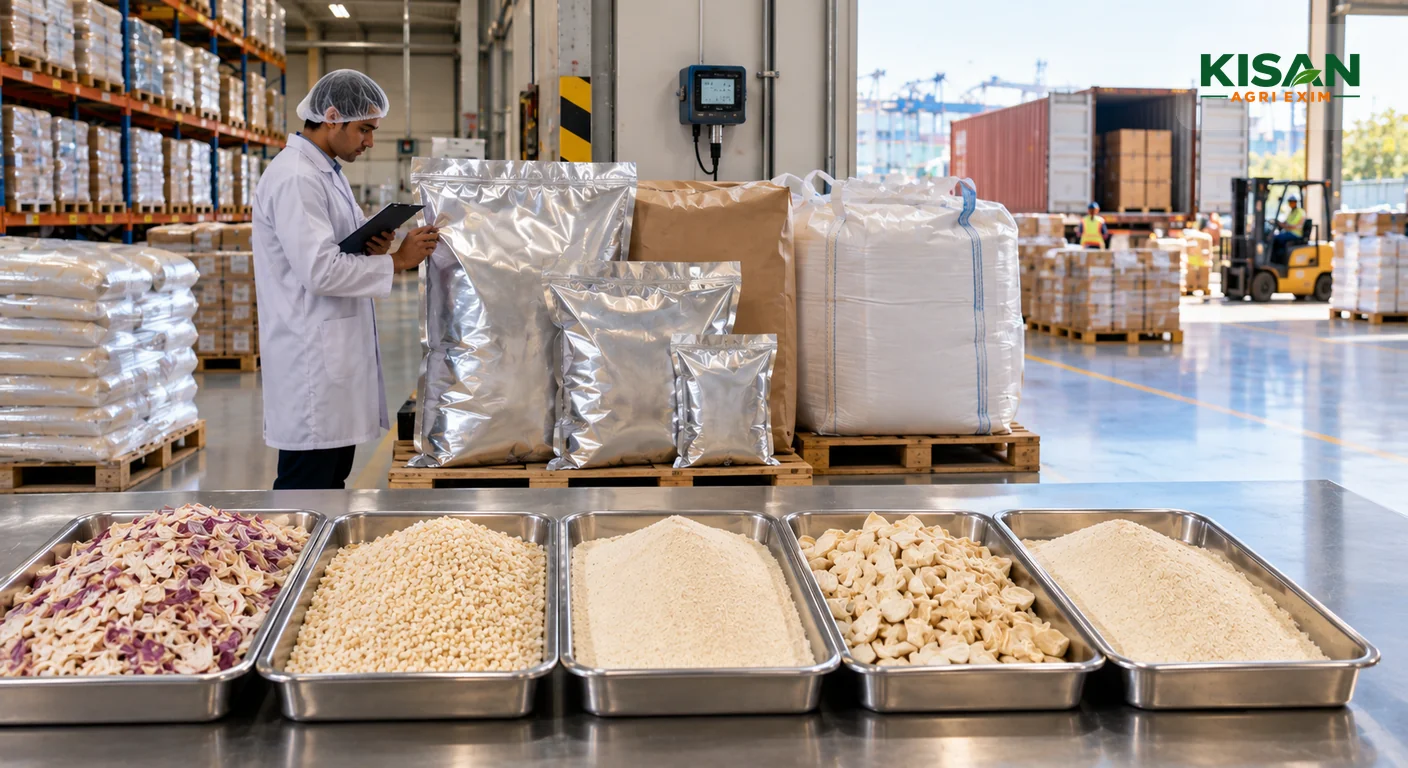
Multi-layer, moisture-barrier bags are standard for export. Garlic is hygroscopic — poor packaging leads to clumping and off-flavors within weeks. Confirm the supplier uses food-grade barrier packaging with proper sealing.
7. Batch traceability
Can the supplier trace any bag back to the raw material lot, processing date, and quality checks? This is non-negotiable for food safety compliance in most import markets.
Conclusion
Sourcing dehydrated garlic for bulk import is not just about price — it requires verifying moisture, particle consistency, microbiological safety, allicin retention, color grade, packaging integrity, and full batch traceability. Requesting the COA and sieve analysis data upfront prevents costly rejections at the destination port and protects your production schedule. A supplier that can deliver on all seven parameters consistently is worth the due diligence.
Next Step
See mesh sizes, moisture parameters, and grades in our dehydrated garlic range or talk to our export sales desk to receive full specification sheets and a custom bulk quote for your manufacturing facility.
FAQs
What moisture level is acceptable for dehydrated garlic?
Dehydrated garlic flakes and minced should have a moisture content of ≤6%, while granules should be ≤5.5%. Higher moisture levels risk clumping, mold growth, and reduced shelf life during transport and storage.
What is the standard Total Plate Count (TPC) for imported dehydrated garlic?
The standard acceptable limit for TPC in dehydrated garlic is less than 100,000 cfu/g. Premium export batches should also be certified free from E. coli (absent in 1g) and Salmonella (absent in 25g).
How is dehydrated garlic packaged for ocean freight?
Dehydrated garlic is typically packaged in multi-layer, food-grade moisture-barrier bags (usually 25 kg bags). This protects the hygroscopic garlic from moisture absorption and clumping during sea transit.
Ready to source?
Looking for a reliable export partner?
Our export team responds within 24 hours to help you with your bulk sourcing and custom quotation requirements.