Indian Onion Varieties for Dehydration
Key Takeaway
White onion cultivars are generally suited to dehydration where pale color and high solids are priorities, while red cultivars can produce darker dried pieces. In a 2022 Indian study, Bhima Shubhra and Bhima Dark Red recorded the highest dehydration ratio at 7.14:1; Bhima Kiran recorded 6.25:1.
Which Indian Onion Varieties Suit Dehydration?
Indian onion varieties suited to dehydration are assessed by dry matter, color, pungency and conversion yield. White cultivars are commonly associated with pale flakes and powders, while red types can yield darker products; in a 2022 Indian study, dehydration ratios ranged from 6.25:1 for Bhima Kiran to 7.14:1 for Bhima Shubhra and Bhima Dark Red.
For processors and buyers, variety is one part of raw-material selection, not a guarantee of finished-product performance. Bulb composition affects the amount of dried product recovered from prepared onions, while color and flavor influence whether the output fits a particular food application.
The commercial question is therefore not simply which variety produces the most dried material. Buyers also need to consider whether the resulting color and pungency suit their formulation, and whether the finished product meets the agreed moisture and cleanliness specifications.
How Onion Type Affects Dehydrated Product
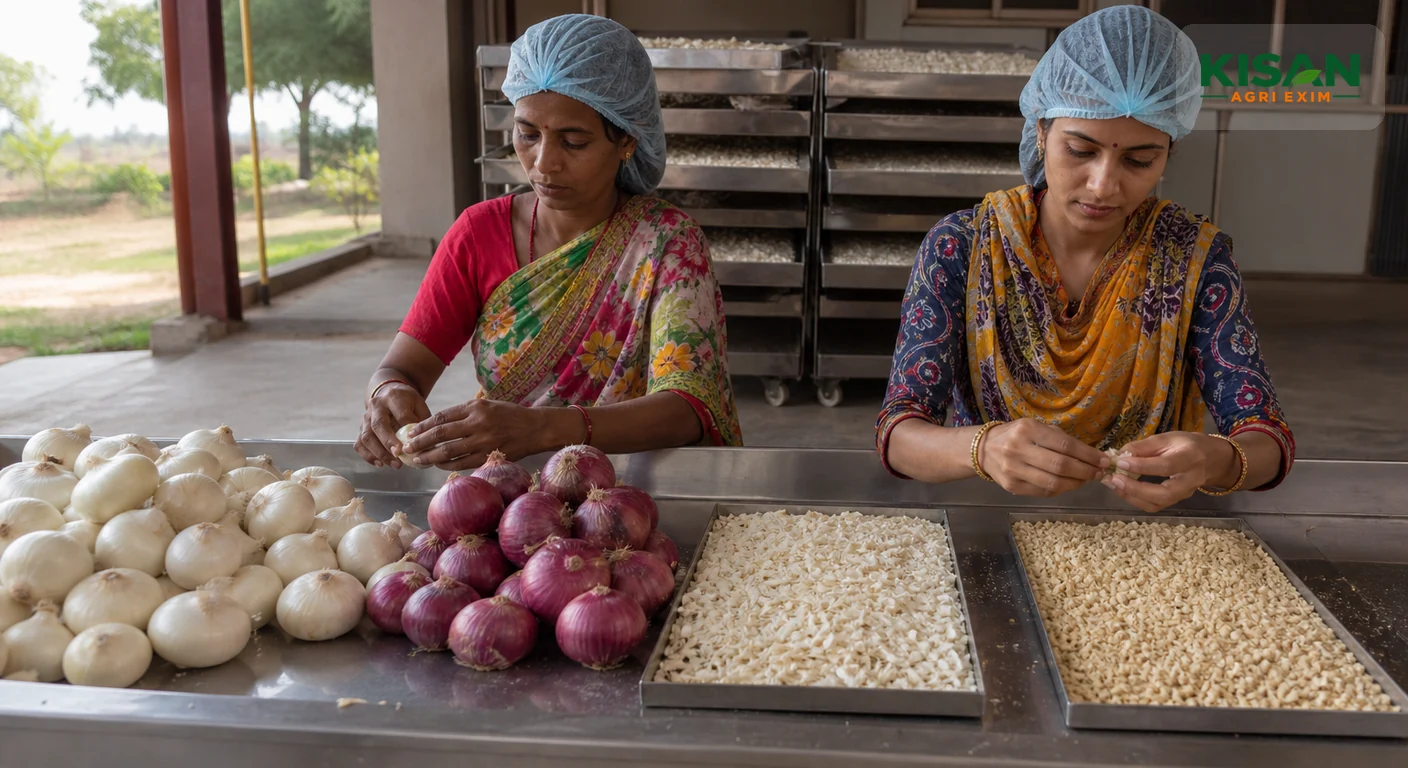
White onion cultivars are used for products where a clean, pale appearance is important. Gujarat White, Phule Safed, Bhima Shweta, Bhima Shubhra, Udaipur-102 and Agrifound White are examples of white types associated with dehydration. Their lack of anthocyanin pigments supports lighter-colored flakes, kibbles and powders for applications such as soups, spice blends and dry seasonings.
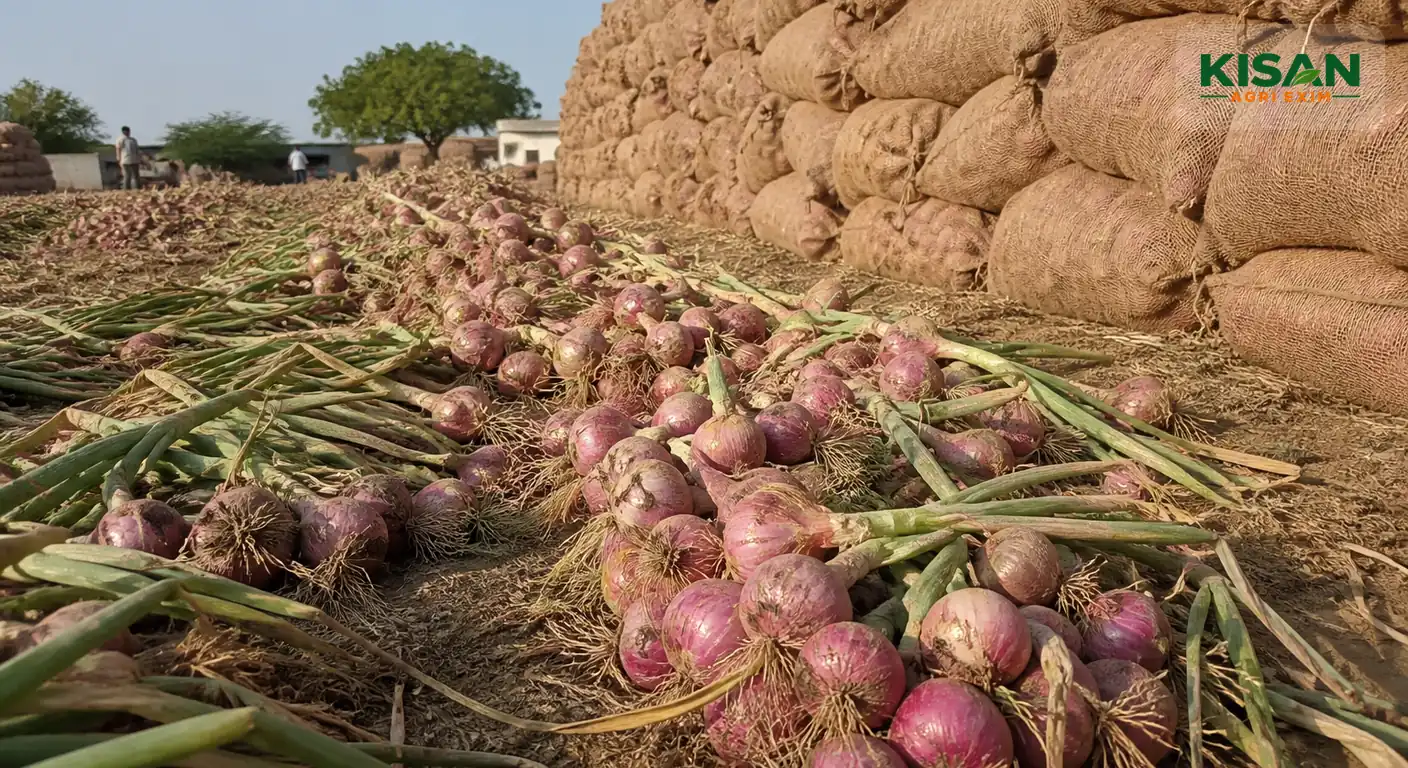
Red and dark red cultivars are also relevant to Indian processing, but their color can change during drying. Pigment degradation and thermal oxidation may produce dull, brownish or purplish-gray pieces. This can limit their suitability for products that require uniform white flakes, while leaving a role in applications where darker color is acceptable and pungency is valued.
Dry matter and total soluble solids (TSS) are important indicators of processing potential. Total dry matter includes both soluble components—such as sugars, fructans and organic acids—and insoluble structural material. High-solids processing onions target 18–26% TSS; at these levels, moisture removal can be rapid. The resulting recovery depends on the raw bulb and process conditions, so variety names should be considered alongside measured composition and the actual product specification.
Flavor matters as much as appearance. Onion pungency develops when tissue disruption brings enzyme and sulfur-containing precursors into contact, generating pyruvate and volatile sulfur compounds. Because some aromatic compounds are lost during drying, a variety’s fresh-bulb pungency influences the character of the dried product. Sugar composition also affects color: higher proportions of reducing sugars can promote browning during warm drying.
Reading Dehydration Ratios and Yield
The dehydration ratio compares the weight of prepared fresh onion entering processing with the weight of the dried product recovered. A lower ratio means less fresh input is required per unit of dried output; the ratio is not a standalone measure of product quality or a guaranteed yield for every plant.
A 2022 evaluation of Indian cultivars reported a dehydration ratio of 7.14:1 for Bhima Shubhra and Bhima Dark Red, the highest among the varieties evaluated. Bhima Kiran recorded the lowest ratio in that evaluation, at 6.25:1. Bhima Shewta, Bhima Light Red and Bhima Red recorded 6.94:1. These results show that cultivar identity can materially affect conversion, but they should be read as study findings rather than universal commercial guarantees.
For procurement teams, the practical comparison is between a variety’s recovery potential and the required product characteristics. A higher ratio can indicate more fresh input per unit of dried output than a lower one, while the color and flavor profile may still determine whether that output is usable for the intended market.
Finished-product quality remains essential regardless of the variety. Standardized grade specifications cited for dehydrated onion set a maximum moisture content of 5.0%. Excessive heating can darken pieces, while roots, skin fragments and other extraneous matter can affect appearance and cleanliness. A sound variety choice supports processing, but it does not replace control of preparation, drying and finished-product inspection.
Conclusion
For procurement managers, QA leads and supply chain directors, Indian onion varieties should be compared on dry matter, color, pungency and reported dehydration ratio—not variety name alone. The 2022 ratios provide a useful reference point, while the final selection should align the expected recovery and dried-product appearance with the buyer’s application and specification.
Next Step
See specifications and cut forms in our dehydrated onion range or dehydrated garlic range, or talk to our export sales desk to get tailored product specifications and custom bulk pricing for your market.
FAQs
Which Indian onion varieties are used for dehydration?
White types such as Gujarat White, Phule Safed, Bhima Shweta, Bhima Shubhra, Udaipur-102 and Agrifound White are associated with dehydration applications that need pale product color. Red varieties may also be processed where a darker appearance is acceptable.
Which Indian onion variety had the highest reported dehydration ratio?
In a 2022 evaluation, Bhima Shubhra and Bhima Dark Red recorded the highest dehydration ratio among the cultivars tested, at 7.14:1. Bhima Kiran recorded 6.25:1 in the same evaluation.
What moisture level is specified for finished dehydrated onion?
The cited standardized grade specification sets a maximum moisture content of 5.0% for finished dehydrated onion products. Drying and handling must also protect the product from excessive darkening and extraneous matter.
Ready to source?
Looking for a reliable export partner?
Our export team responds within 24 hours to help you with your bulk sourcing and custom quotation requirements.