
India Garlic Crop Cycle and Timing
Key Takeaway
Indian garlic is mainly a Rabi crop, sown from late September to November and harvested from February to April. Peak arrivals from late February through May support the main processing season, while storage losses and lower off-season availability can push raw garlic and dehydrated product prices higher.
India’s Garlic Crop Cycle: Regional and Seasonal Overview
India’s garlic crop is predominantly grown in the Rabi season: sowing generally runs from late September to November, and harvesting from February to April. Madhya Pradesh is the largest production belt; the spring arrival peak from late February through May shapes raw garlic availability and the main window for dehydration.
The regional pattern matters to buyers because harvest timing influences both the volume and condition of garlic reaching processors. In FY 2021–22, Madhya Pradesh accounted for 64% of Indian garlic production and Rajasthan for 16%. India produced 2.9 million metric tons in 2023, underscoring the scale of the domestic crop.
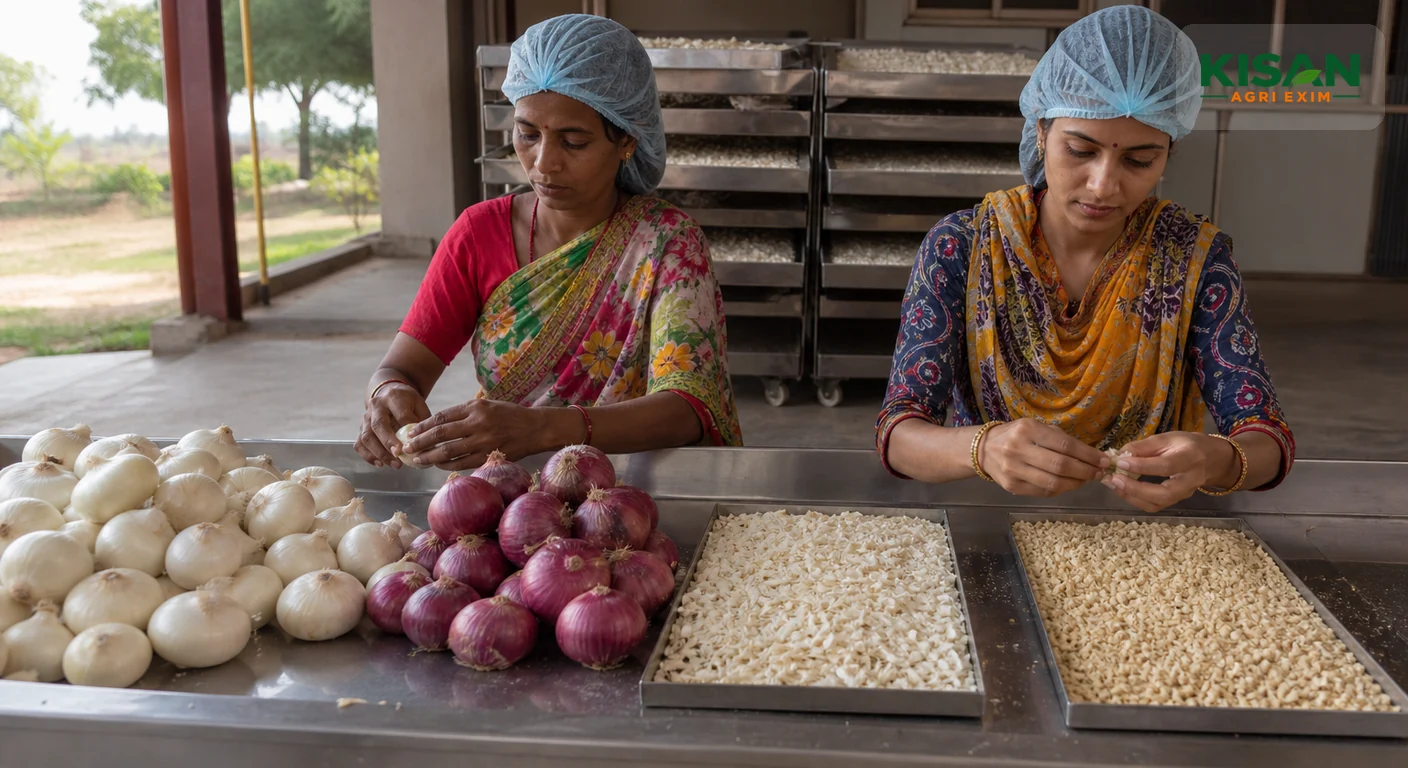
For procurement and supply planning, the crop calendar is only part of the picture. Curing, storage conditions, sprouting and dry-matter levels all affect suitability for processing, finished-product yield and seasonal pricing. Gujarat is also a major processing centre: it accounts for approximately 80% of India’s onion and garlic dehydration units.
Major Garlic Belts and Crop Timing
Madhya Pradesh is the principal production hub, with key growing areas around Mandsaur, Neemuch, Ratlam and Ujjain. Its large share of national production makes the state an important reference point for wholesale market trends.
Rajasthan is another major belt, with production concentrated in the Hadoti region, including Kota, Baran, Jhalawar and Bundi. Gujarat grows garlic across Saurashtra and northern areas, while also serving as an important dehydration and export-processing corridor. Uttar Pradesh and Maharashtra contribute additional production.
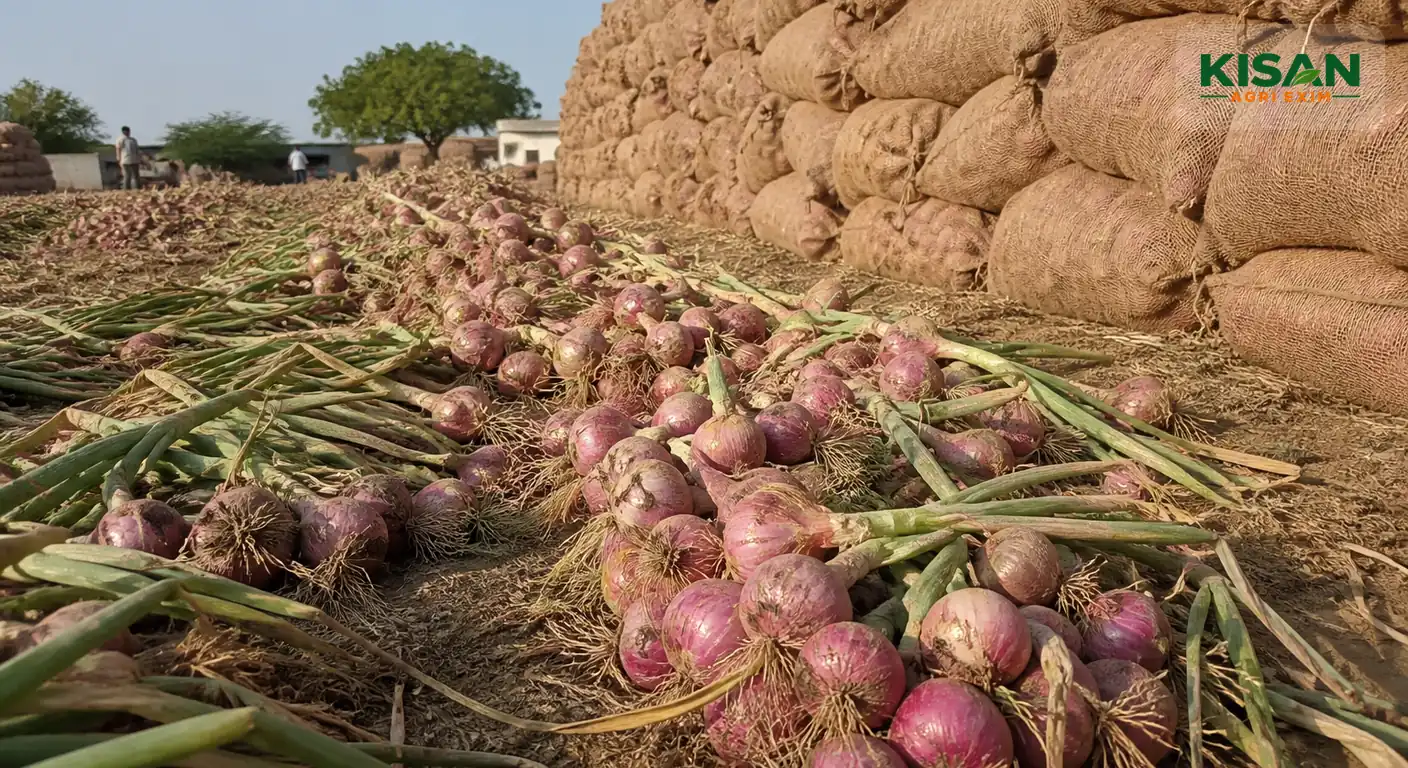
Sowing generally takes place from late September through November. Garlic is planted as temperatures and soil conditions support root establishment and early vegetative growth. Harvest usually begins in February and continues into April, with timing varying by region and crop development.
Fresh-crop arrivals at major agricultural markets typically build from late February and remain significant through May. This arrival period overlaps with the main processing season, which can extend into June. Larger fresh volumes in spring generally put downward pressure on raw garlic prices compared with the later months of the year.
Curing, Storage and Dehydrated Garlic Availability
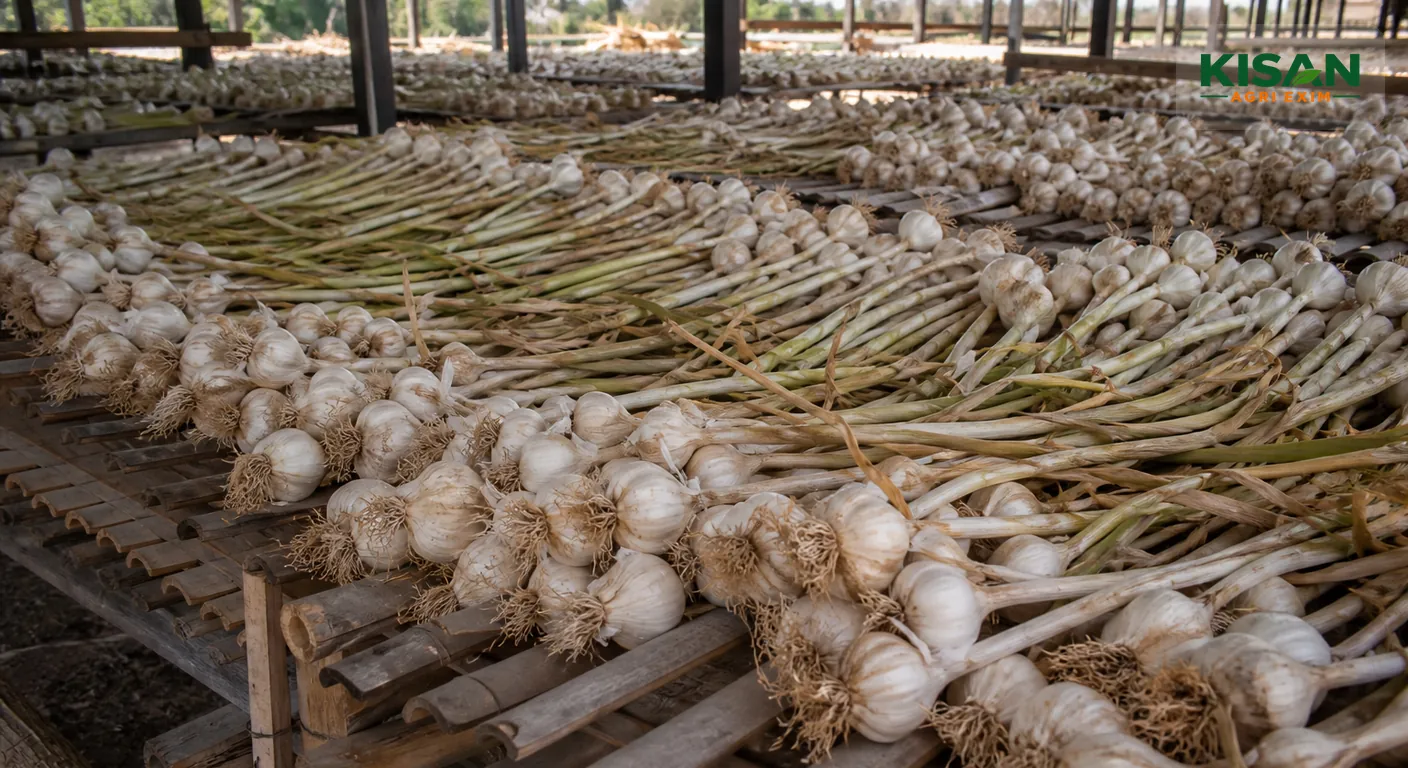
After harvest, garlic bulbs need curing so their outer skins dry and the neck tissues constrict. Bulbs may be dried in the field under their foliage or on raised, ventilated racks. Inadequate curing can leave moisture around the neck, encourage fungal growth and contribute to weight loss, rot or premature sprouting during storage.
Traditional storage uses shaded, naturally ventilated structures. As the monsoon and post-monsoon period approaches, warmer and more humid conditions increase the risk of storage losses and internal sprouting, particularly without controlled temperature and humidity. Fresh garlic stored in cool, dry and well-ventilated conditions has a shelf life of around 2–3 months.
Fresh garlic contains approximately 65–70% moisture, and about 6 kg of fresh garlic is required to produce 1 kg of dehydrated garlic. The crop’s condition and dry matter therefore have direct commercial consequences: they affect process yield, the volume of raw material needed and the quality of the finished product.
The main fresh-garlic processing window runs from February through May or June. From July onward, fresh availability tends to decline while prices rise. Stored or sprouted bulbs can produce bitter notes and green or grey discoloration in dehydrated flakes, minced garlic and powder. Dehydrated garlic, by contrast, has a shelf life of around one year, supporting availability beyond the fresh harvest window.
Raw garlic prices generally follow an inverse seasonal pattern to harvest volume: prices are typically lowest in spring, particularly March and April, and tend to peak from October through December. This seasonal movement carries through to dehydrated garlic pricing, as raw material availability and condition affect processing costs and yield.
Conclusion
For procurement managers, QA leads and supply chain directors, the key planning window is the February-to-June fresh-crop and processing season, with Madhya Pradesh and Rajasthan central to domestic supply. Curing quality, storage losses and the seasonal price rise from autumn onward all influence dehydrated garlic availability, yield and cost.
Next Step
See specifications and cut forms in our dehydrated garlic range, or talk to our export sales desk to get tailored product specifications and custom bulk pricing for your market.
FAQs
When is garlic harvested in India?
Indian garlic is generally harvested from February to April. Fresh arrivals at major markets typically peak from late February through May.
Which states are the main garlic-producing regions in India?
Madhya Pradesh and Rajasthan are the leading production states in the reported FY 2021–22 figures, contributing 64% and 16% of national production, respectively. Gujarat, Uttar Pradesh and Maharashtra are also part of the production landscape.
How does the crop cycle affect dehydrated garlic prices?
Fresh arrivals and processing are strongest in spring, when raw garlic prices are generally lower. From July onward, fresh availability declines, and prices typically rise toward a peak in October–December; stored or sprouted bulbs can also affect dehydrated product quality.
Ready to source?
Looking for a reliable export partner?
Our export team responds within 24 hours to help you with your bulk sourcing and custom quotation requirements.